
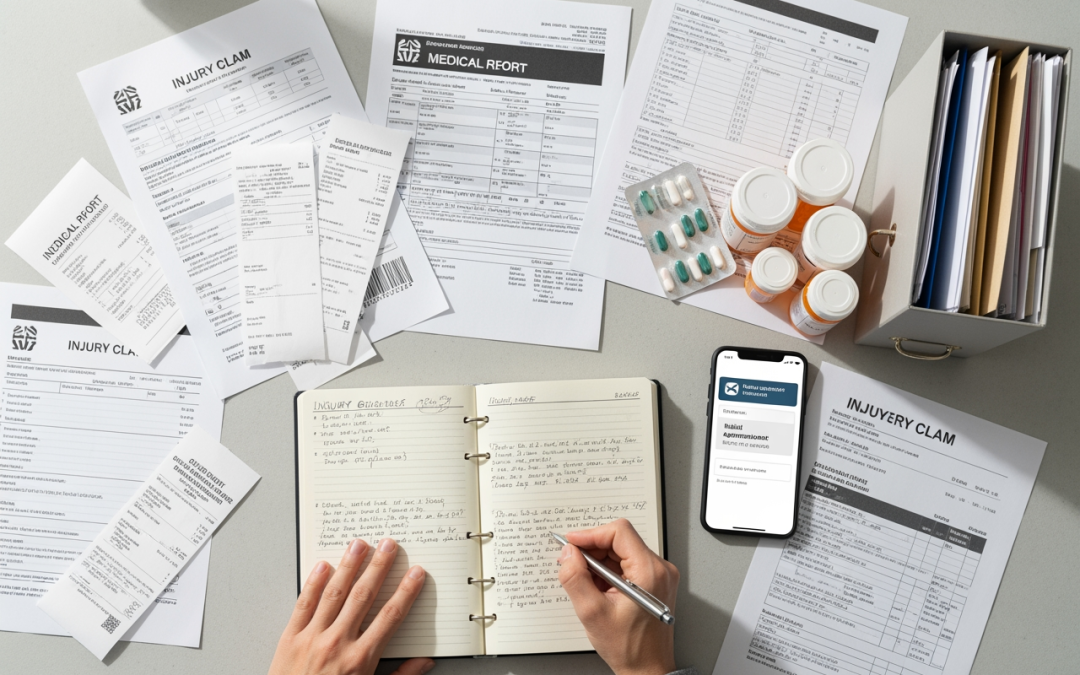
Accidents disrupt lives in ways that extend far beyond the initial moment. Pain, stress, and uncertainty combine with medical bills, complex paperwork, and time away from work. In these circumstances, one practical step stands out: documenting injuries.
Whether the accident happens in a workplace, on the road, or in a public space, careful documentation provides a foundation for any personal injury claim.
Why Documenting Injuries Matters
In Western Australia, compensation claims often rely on strict evidence requirements. Medical files, receipts, and witness statements matter, but insurers and defendants usually look for gaps in the story. Documenting injuries for claims ensures that no such gaps exist.
When a construction worker suffers a back injury from faulty scaffolding, it is not enough to say “I was hurt.” The worker needs proof: scans showing damage, therapy notes confirming treatment, and a diary recording daily limitations. With consistent evidence, it becomes difficult for an insurer to argue that the injury was minor or unrelated.
Key takeaways:
- Documenting injuries is critical in proving the seriousness of harm.
- Clear evidence strengthens your position in negotiations and the court.
- Records reflect both medical treatment and real-world impacts.
The Legal Framework in Western Australia
Understanding the local legal context helps explain why documenting injuries for claims is so powerful.
Workers’ Compensation
Under the Workers’ Compensation and Injury Management Act 1981 (WA), injured employees must lodge claims promptly, supported by medical evidence. Employers and insurers require proof of incapacity, treatment, and ongoing restrictions. Without thorough documentation, claims can be delayed or rejected.
If you’ve been injured at work, our team can assist with making a workers’ compensation claim and ensuring your records meet all requirements.
Motor Vehicle Accidents
Car accident compensation in WA is managed under the Motor Vehicle (Third Party Insurance) Act 1943 and overseen by the Insurance Commission of Western Australia (ICWA). Claimants must demonstrate both the occurrence of injury and its impact on earning capacity and quality of life. Records of medical treatment, travel to appointments, and rehabilitation costs are crucial.
Proper documentation is essential when seeking compensation for car accident injuries in Western Australia.
Public Liability Claims
Public liability law applies when an individual is injured in a public or private space due to negligence, such as slips, trips, or unsafe premises. Evidence of medical treatment, photographs of hazards, and detailed injury journals support these claims.
Understanding your rights in a public liability claim begins with proper documentation from day one.
Catastrophic Injuries
Life-altering injuries require substantial, long-term evidence. Documenting injuries in these cases includes hospitalisation records, surgical reports, therapy progress, and assessments of future care needs. Compensation depends on showing the full scope of lifetime impact.
For severe injuries, obtaining legal help for catastrophic injuries ensures your documentation captures the complete picture of your needs.
Creating Proof Through Documenting Injuries
Strong cases combine both objective medical records and subjective personal accounts. Together, they form a comprehensive picture.
Medical Records
Medical documentation is the backbone of every claim. Essential records include:
- Doctor’s consultations – treatment plans, certificates of incapacity, progress notes.
- Specialist reports – orthopaedic surgeons, neurologists, occupational physicians.
- Therapy sessions – physiotherapy, occupational therapy, psychology.
- Prescriptions – dosage, changes, and side effects.
- Diagnostic tests – MRIs, CT scans, X-rays, blood tests.
These records confirm diagnosis, treatment, and prognosis. They are invaluable in negotiations with insurers and in court proceedings.
Personal Journal
A personal injury journal adds depth, capturing daily struggles that medical files cannot.
Examples of effective journal entries include:
- Pain tracking – descriptions of pain, frequency, and severity.
- Functional limitations – difficulty walking, lifting, or driving.
- Emotional impact – frustration, anxiety, or strain on relationships.
- Lost experiences – missed family events, hobbies abandoned, career disruptions.
Think of journals like a map alongside technical blueprints. Doctors provide the technical diagrams; your journal shows the lived journey. Both are essential to navigate the claim successfully.
Documenting Injuries to Counter Insurer Tactics
Insurers often adopt strategies designed to reduce payouts. Properly documenting injuries for claims helps neutralise these tactics.
Minimising Severity
An insurer may argue that an injury is exaggerated. Consistent medical reports combined with daily pain logs demonstrate authenticity and undermine such claims.
Pre-Existing Conditions
Insurers sometimes suggest that injuries existed before the accident. A clear timeline of medical records and journals beginning immediately after the incident helps prove causation.
Limiting Compensation
Insurers often focus only on test results. Journals documenting sleepless nights, fatigue, or lost enjoyment of life broaden the picture, proving that injuries extend beyond the scan.
Key takeaways:
- Consistency over time builds credibility.
- Journals highlight the human cost of injury.
- Documentation ensures recognition of total damages.
Practical Steps for Documenting Injuries
- Start immediately – begin recording from the first medical visit.
- Be consistent – record every appointment, symptom, and limitation.
- Organise carefully – keep all documents, receipts, and correspondence in one place.
- Share with your lawyer – provide evidence to your legal team for review.
- Seek support – contact us for guidance on using documentation effectively.
Case example: A café worker slipped on a wet floor and fractured her wrist. She kept medical certificates, X-rays, and daily pain logs while also noting her inability to perform shifts. Her thorough records enabled our lawyers to demonstrate both financial and personal loss, securing a strong settlement.
Long-Term Documentation for Serious Injuries
For catastrophic injuries, documentation must cover extended treatment and care. Examples include:
- Hospitalisation records – admissions, surgeries, discharge summaries.
- Rehabilitation reports – occupational therapy, home modifications.
- Specialist assessments – long-term prognosis, permanent impairment ratings.
- Financial records – lost earnings, superannuation impacts, care costs.
These documents form the basis of claims that secure lifetime financial security for clients.
Common Mistakes to Avoid When Documenting Injuries
- Delaying record-keeping – gaps weaken claims.
- Relying on memory – always document immediately.
- Failing to request medical files – do not assume providers will supply them.
- Incomplete journals – inconsistency raises doubts.
- Discarding receipts – small expenses add up in compensation claims.
Frequently Addressed Concerns
How long should I keep records? Keep all records until your claim is finalised. For catastrophic cases, store them permanently.
Do I need both medical records and a journal? Yes. Medical evidence shows diagnosis and treatment, while journals capture daily impacts and suffering.
What if I missed early documentation? Start as soon as possible. Even partial records provide valuable support.
Final Thought
At Separovic Injury Lawyers, our legal team has worked with clients across Western Australia who turned meticulous records into strong cases. The result has been fairer settlements, greater recognition of the impact of their injuries, and security for the future.
Documenting injuries transforms uncertainty into strength. Records, journals, and evidence form the backbone of successful claims. They counter insurer tactics, capture the full impact of injuries, and protect your right to fair compensation.
At Separovic Injury Lawyers, we help clients across Western Australia achieve justice through strong documentation. Start documenting injuries for claims today, and let our experienced lawyers guide you towards a secure outcome.