
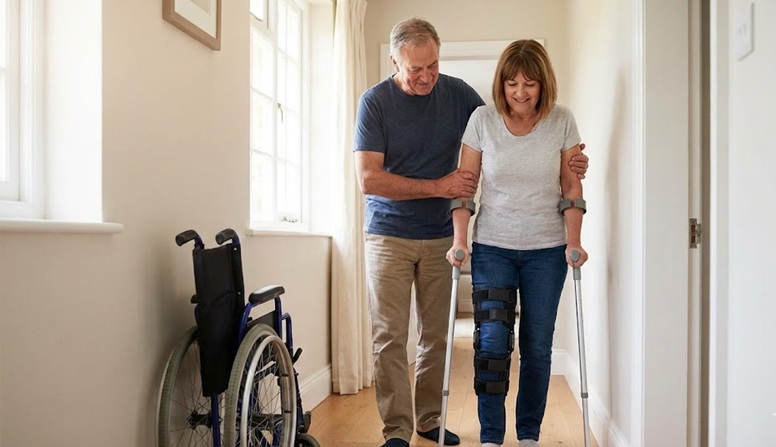
When your spouse suffers a serious injury, your life changes overnight. You become more than a partner – you become a carer, advocate, and often the sole income earner. The physical and emotional demands are relentless. The financial strain can feel overwhelming.
Many Western Australians in this situation don’t realise they may be entitled to caregiver compensation Perth law provides for exactly these circumstances. The system exists to recognise the economic value of unpaid care. Understanding your rights is the first step toward accessing the financial support your family needs during recovery.
This guide explains what caregiver compensation covers, which compensation pathways apply depending on how your spouse was injured, how care is calculated, and what you need to do to protect your claim.
Understanding Caregiver Compensation Rights in Western Australia
What Caregiver Compensation Covers
Caregiver compensation Perth recognises something that many families discover the hard way – caring for an injured person has real economic value. Professional home care in Perth typically costs between $50 and $80 per hour. When you provide this care yourself, you save the compensation system significant costs. Western Australian law acknowledges this and provides a pathway for family caregivers to claim reasonable compensation for their time and effort.
The legal basis for these claims stems from a fundamental principle in personal injury law. Injured parties should be restored, as far as money allows, to their pre-injury position. This includes compensating family members who sacrifice their time, careers, and wellbeing to provide care.
Personal injury lawyers Perth experienced in caregiver claims understand how to document, value, and present these claims to ensure you receive fair recognition for what you are providing.
Types of Injuries That Trigger Caregiver Claims
Not every injury creates an entitlement to caregiver compensation Perth. The injury must be serious enough to require genuine ongoing assistance with daily activities. Short-term care during a straightforward recovery attracts lower compensation than long-term care for permanent disabilities.
Common qualifying injuries include:
- Traumatic brain injuries requiring supervision and cognitive assistance
- Spinal cord injuries necessitating help with mobility and personal care
- Multiple fractures limiting independence during recovery
- Severe burns requiring wound care and assistance with daily tasks
- Amputation injuries demanding support during rehabilitation and adaptation
The severity and duration of care needs directly affect the compensation amount. A spouse who requires permanent, full-time care generates a significantly larger claim than one who needs short-term assistance during a recovery period.
Financial Support Pathways Available to Perth Caregivers
Multiple compensation pathways exist for Perth caregivers. The right pathway depends on how your spouse was injured. Understanding which system applies determines what injured spouse financial support you can access.
Workers Compensation Claims
When your spouse suffers a workplace injury, WorkCover WA provides specific provisions for family care. If your partner requires care due to their work-related injury, you may claim compensation through their workers compensation Perth claim.
Workers compensation Perth recognises both gratuitous care – unpaid care provided by family – and commercial care services. The scheme compensates family caregivers at reasonable rates, typically calculated at 75% of commercial rates to account for the non-professional nature of family care.
Key entitlements include compensation for past care already provided, future care needs based on medical assessments, reimbursement for care-related expenses, and equipment and home modification costs. The claim must demonstrate a direct link between the workplace injury and the care requirements. Medical evidence from treating specialists forms the foundation of successful claims.
Motor Vehicle Accident Claims
Road accidents represent the most common source of serious injuries requiring spousal care. The Insurance Commission of Western Australia (ICWA) provides comprehensive coverage for care needs arising from traffic accidents, and motor vehicle claims typically offer more generous caregiver compensation Perth than other injury types.
When your spouse is injured in a car accident, their compensation claim can include substantial amounts for family care. ICWA recognises that family caregivers often provide superior care to commercial alternatives, particularly for intimate personal care tasks. The no-fault scheme ensures injured parties receive support regardless of who caused the accident, though at-fault drivers can claim additional compensation through common law claims.
For serious road accident injuries, car accident injury compensation claims can include comprehensive coverage for both your spouse’s losses and your own losses as a caregiver. Legal advice helps you understand how both streams interact and how to present each claim effectively.
Public Liability Claims
Injuries occurring in public places, shops, or on someone else’s property fall under public liability law. If your spouse was injured due to negligent property maintenance or unsafe conditions, a public liability claim Perth can include caregiver compensation as part of the overall damages. Making a public liability claim Perth requires proving the property owner or occupier failed in their duty of care.
These claims require proving the property owner’s negligence caused the injury. Once liability is established, compensation for family care follows the same principles as other injury types – reasonable compensation for time spent providing necessary care.
Common public liability scenarios include slip and fall injuries in shopping centres, dog attacks in public spaces, inadequate lighting causing accidents, and poorly maintained premises leading to injuries. A public liability claim requires careful documentation of the hazard, the injury, and the resulting care needs.
Calculating Caregiver Compensation Amounts
Determining the value of your care claim involves detailed assessment of both past and future care needs. Courts and insurers use established methodologies to ensure fair compensation for family caregivers.
Hours of Care Assessment
The starting point for any care claim is quantifying the hours you dedicate to caring for your injured spouse. This includes both direct care and supervisory care.
Direct care activities include assistance with showering, dressing, and toileting, wound care and medication management, meal preparation and feeding assistance, mobility support and transfer assistance, and transport to medical appointments.
Supervisory care becomes relevant when your spouse requires someone nearby due to cognitive impairment, seizure risk, or fall risk. Courts recognise this as genuine care even without constant hands-on assistance.
Most injured spouse financial support claims require you to maintain detailed records. A care diary documenting daily activities, time spent, and tasks performed strengthens your claim significantly. Start recording this information as early as possible – contemporaneous records carry far more weight than retrospective estimates.
Hourly Rate Calculations
Western Australian courts typically compensate family caregivers at rates between $25 and $40 per hour, depending on the nature and intensity of care provided. These rates reflect approximately 60 to 80% of commercial care rates.
The rate varies based on several factors. Complexity of care tasks matters – intimate personal care attracts higher rates than domestic assistance. Skill requirements also count – specialised tasks like wound management justify increased rates. Intensity of care and impact on your employment are also relevant considerations.
Courts discount family care rates compared to commercial services because family caregivers don’t pay tax on compensation, don’t require professional insurance, and often combine care with normal household activities.
Past and Future Care Claims
Your care claim divides into two components: past care already provided and future care anticipated going forward.
Past care claims calculate the hours you’ve provided multiplied by the appropriate hourly rate. This creates a lump sum for care delivered from the injury date to the settlement date.
Future care claims require expert evidence projecting your spouse’s long-term needs. Occupational therapists and rehabilitation specialists assess whether your spouse will regain independence or require permanent assistance. For permanent disabilities requiring lifelong care, future care claims can reach hundreds of thousands of dollars. A 45-year-old requiring 20 hours of weekly care for a life expectancy of 35 more years generates a claim exceeding $500,000 before accounting for present value calculations.
Separovic Injury Lawyers assists Perth families navigating caregiver compensation claims across workers compensation, motor vehicle accident, and public liability pathways – all on a no win no fee basis.
Eligibility Requirements for Claiming Caregiver Compensation
Not every caregiving situation qualifies for this type of compensation. Western Australian law imposes specific criteria that must be satisfied before you can claim.
The Care Must Be Necessary
The fundamental requirement is that your spouse genuinely needs the care you’re providing. Insurers frequently dispute care claims by arguing injured parties exaggerate their limitations. Medical evidence proving care necessity comes from treating doctors confirming functional limitations, occupational therapy assessments identifying specific care needs, physiotherapy reports detailing mobility restrictions, and neuropsychological testing for cognitive impairments.
The care must address genuine deficits, not simply make life more comfortable. Courts distinguish between necessary care and voluntary assistance that any loving spouse might provide. Be honest and accurate about care needs – exaggerating requirements damages your credibility and jeopardises your entire claim.
The Care Must Be Reasonable and Gratuitous
Even when care is necessary, it must be reasonable in scope and duration. Reasonableness assessments consider whether the level of care matches the injury severity, whether the care frequency aligns with medical recommendations, and whether the duration reflects realistic recovery timeframes.
Gratuitous care means you provide it without payment. If your spouse pays you a wage for caring, those payments reduce your care claim dollar for dollar. This principle prevents double-recovery. Some families establish formal care arrangements where the injured spouse pays the caring spouse from their disability pension or other income. Whilst this provides immediate support, it reduces the ultimate compensation claim. Seek legal advice before establishing such arrangements.
Impact on Your Employment and Income
Caring for an injured spouse often forces difficult employment decisions. Understanding how these career impacts factor into injured spouse financial support helps you make informed choices.
Reduced Working Hours and Career Opportunities Foregone
Many Perth caregivers reduce their working hours to accommodate care responsibilities. Your care compensation claim can include the income you’ve lost by reducing hours. Calculate this by comparing your pre-injury earnings to your current reduced income, multiplied by the period you’ve worked reduced hours.
This claim component is separate from caregiver compensation. You’re entitled to both – compensation for lost income and compensation for the care hours you’re providing.
Some caregivers turn down promotions, decline job opportunities, or abandon career advancement entirely. These opportunity costs can be included in claims, though they require concrete evidence of the opportunities and their likely financial benefit. Evidence supporting opportunity cost claims includes job offers declined due to care responsibilities, promotion opportunities you couldn’t pursue, professional development courses you couldn’t attend, and business ventures you couldn’t start.
Complete Career Cessation
When injuries are severe enough to require full-time care, many spouses leave employment entirely. This creates the most significant financial impact and generates the largest care claims.
Ceasing work to care for your injured spouse entitles you to claim all lost income from cessation date to retirement age, lost superannuation contributions, lost career progression you would have achieved, and diminished future earning capacity if you eventually return to work. These claims require vocational assessment experts to calculate your likely career trajectory absent the injury.
For injuries causing permanent or severe disability, catastrophic injury compensation claims encompass both your spouse’s losses and the full range of your caregiver losses. These are complex, high-value claims where specialist legal advice from the outset makes a significant difference to the outcome. Catastrophic injury compensation cases typically involve life expectancy calculations, vocational assessments, and detailed projections of future care costs that require experienced legal expertise.
The Claims Process and Common Challenges
Initial Documentation and Medical Evidence
Begin documenting your care immediately after your spouse’s injury. Record daily entries noting the date and time of care provided, specific tasks performed, duration of each care session, your spouse’s condition and needs that day, and any medical appointments or treatments.
Your spouse’s treating doctors must provide detailed reports confirming their care needs. These reports should specifically address functional limitations preventing independent living, specific tasks your spouse cannot perform without assistance, expected duration of care needs, and prognosis for recovery or permanent disability.
Occupational therapy assessments provide the most valuable evidence for these claims. These specialists evaluate daily living activities and quantify exactly what assistance your spouse requires. Multiple specialist opinions create a comprehensive picture of care needs that is difficult for insurers to challenge.
Insurer Disputes and Legal Representation
The most frequent dispute involves insurers arguing your spouse doesn’t need as much care as you’re claiming. They may commission independent medical examinations showing your spouse is more capable than your evidence suggests. Counter these challenges by ensuring your spouse’s limitations are thoroughly documented in medical records. Don’t let your spouse minimise their difficulties during medical appointments – doctors need to understand their genuine daily struggles.
Insurers may also argue you could reduce care needs through rehabilitation, assistive equipment, or lifestyle modifications. Respond by obtaining occupational therapy recommendations for optimal care levels. When your care provision matches expert recommendations, insurers struggle to argue it’s excessive.
Legal representation significantly improves outcomes in disputed claims. Workers compensation lawyers Perth and personal injury specialists experienced in caregiver claims understand the medical issues, the evidentiary requirements, and how to present cases effectively. Most personal injury lawyers work on a no win no fee basis, meaning you only pay if your claim succeeds.
Time Limits and Maximising Your Claim
Western Australian law imposes strict time limits for commencing these claims. For motor vehicle accidents, you must commence court proceedings within three years of the accident date. For public liability claims, the limitation period is also three years from when the injury occurred. Workers compensation claims have different timeframes – you must notify the employer of the injury within six months, though this can be extended in some circumstances.
Thinking carefully about future care needs is equally important. As you age, providing physical care becomes more difficult. Future care claims should account for your declining physical capacity to provide care, potential disease progression or complication development, the eventual need to transition to professional care, and equipment and home modifications that may become necessary.
Starting documentation early and seeking legal advice promptly protects your rights while building the strongest possible evidence base for your claim. Every case is different – outcomes depend on your specific circumstances, and legal advice should be sought for your particular situation.
Conclusion
The financial strain of caring for an injured spouse extends far beyond medical bills and lost wages. Caregiver compensation Perth recognises the economic value of unpaid care provided to injured spouses, ensuring family caregivers receive fair recognition for their sacrifices.
Western Australian law provides clear pathways to claim compensation for gratuitous care, lost income, and foregone career opportunities – across workers compensation, motor vehicle accident, and public liability claims. Successful claims require comprehensive documentation, medical evidence, and understanding of complex legal requirements. Missing time limits permanently eliminates compensation rights regardless of loss severity.For a free assessment of your caregiver compensation entitlements, contact our personal injury lawyers Perth on (08) 9227 1000. We’ll explain what you’re entitled to, help you understand the claims process, and provide clear guidance on protecting your rights while supporting your injured partner.