
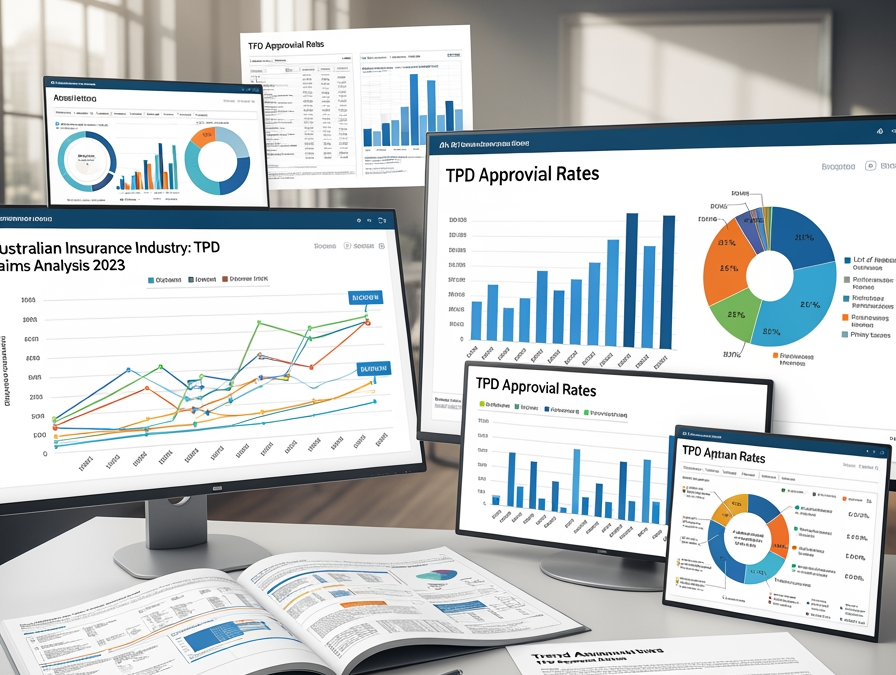
The landscape of Total and Permanent Disability (TPD) insurance claims in Australia has undergone significant changes in recent years, with approval and denial rates fluctuating in response to regulatory reforms, industry practices, and evolving medical evidence standards. Understanding current TPD claim statistics trends provides valuable insights for policyholders navigating the complex claims process and helps set realistic expectations about potential outcomes.
Recent data reveals concerning patterns in how insurers handle TPD claims, with TPD approval rates Australia showing considerable variation between different providers, policy types, and claim circumstances. This comprehensive analysis examines current approval and denial rates, emerging patterns affecting claim outcomes, and what these trends mean for individuals seeking TPD compensation.
Overview of TPD Claims in Australia
The Australian TPD Insurance Landscape
Australia’s TPD insurance market represents a substantial component of the broader life insurance sector, with millions of Australians holding TPD coverage through either retail insurance policies or superannuation funds. The industry processes thousands of claims annually, with total claim payments exceeding billions of dollars each year. However, the path from lodging a claim to receiving payment remains fraught with challenges, as evidenced by persistently high denial rates across the sector.
TPD coverage typically comes in two forms: retail policies purchased directly from insurers and group policies provided through superannuation funds. These different policy types show distinct approval patterns, with retail policies generally requiring more stringent evidence but sometimes offering broader coverage definitions. Superannuation-linked TPD insurance, while more accessible and affordable, often contains restrictive policy definitions that complicate successful claims.
The claims landscape encompasses diverse disabilities, from physical injuries preventing manual work to psychiatric conditions affecting cognitive capacity. This diversity creates complex assessment challenges for insurers, who must evaluate permanent incapacity across vastly different occupational contexts and medical conditions. The variety of claim types contributes to the wide variation in approval rates observed across the industry.
Key Industry Players and Their Performance
Major insurance providers operating in Australia demonstrate significantly different claim handling performance, with some maintaining approval rates above 80% while others approve fewer than 60% of claims lodged. These variations reflect differences in policy definitions, assessment processes, medical panel expertise, and organisational culture regarding claims management. Policyholders should understand that their insurer’s historical performance provides important context for their own claim prospects.
Industry data collected by the Australian Prudential Regulation Authority (APRA) reveals that superannuation funds’ group insurance arrangements show particularly variable performance. Some funds demonstrate excellent claims handling with rapid assessment and high approval rates, while others face persistent complaints about delayed processing and questionable denial decisions. This variation underscores the importance of understanding your specific policy provider’s track record.
The Australian Financial Complaints Authority (AFCA) complaint statistics provide additional insight into insurer performance. Insurers generating high complaint volumes relative to their market share often indicate problematic claims handling practices. AFCA determinations frequently favour complainants in TPD disputes, suggesting that many initial denials lack proper justification under the policy terms.
Current Approval and Denial Rates
National TPD Approval Statistics
Analysing recent TPD claim statistics trends across the Australian insurance industry reveals approval rates typically ranging between 55% to 75%, depending on the insurer, policy type, and claim characteristics. This means that roughly one-quarter to nearly half of all TPD claims face initial denial, representing thousands of rejected claims annually. These figures highlight the challenging reality many policyholders encounter when seeking legitimate entitlements.
Year-on-year comparisons show modest improvements in overall TPD approval rates Australia following the Banking Royal Commission and subsequent regulatory reforms. Insurers have faced increased scrutiny of claims handling practices, with APRA requiring improved transparency and faster processing times. However, approval rates remain substantially below consumer expectations, particularly given that most claimants have paid premiums for years before lodging claims.
Historical data indicates that TPD approval rates were higher in previous decades, declining progressively as insurers adopted more restrictive assessment practices and interpretation of policy definitions. The Royal Commission revelations exposed systemic issues in life insurance claims handling, including inappropriate denial of legitimate claims to meet profit targets. While reforms have improved some practices, approval rates have not returned to historical levels, suggesting ongoing challenges persist.
Regional variations in approval rates exist across Australian states, though comprehensive state-by-state data remains limited due to insurer reporting practices. Anecdotal evidence from legal practitioners suggests that Western Australian claims may face additional scrutiny in some circumstances, potentially reflecting differences in medical specialist availability or variations in occupational profiles across regions.
Common Reasons for Claim Denials
Understanding why insurers deny TPD claims helps claimants avoid common pitfalls and strengthens initial submissions. Medical evidence insufficiency remains the single most frequent denial reason, with insurers claiming that submitted reports fail to demonstrate permanent incapacity meeting the policy definition. This catch-all justification often masks more complex issues around policy interpretation or insurer reluctance to accept legitimate claims.
Policy definition disputes generate substantial denial volumes, particularly around “own occupation” versus “any occupation” TPD definitions. Insurers frequently interpret these definitions narrowly, arguing that claimants retain capacity to perform simplified versions of their occupation or hypothetical alternative roles. These disputes often require detailed vocational evidence and careful policy analysis to resolve successfully.
Pre-existing condition exclusions account for significant denial numbers, with insurers arguing that claimants’ disabilities existed before policy commencement or during waiting periods. These denials frequently overreach the actual policy terms, particularly when current disabilities differ substantially from earlier health issues or when proper medical evidence establishes clear progression or new conditions.
Procedural non-compliance issues, including missed deadlines, incomplete claim forms, or failure to attend independent medical examinations, provide technical grounds for denials. While some procedural requirements are reasonable, insurers sometimes impose onerous requirements that effectively create barriers to legitimate claims. Understanding and meeting all procedural requirements remains essential for avoiding technical denials.
Occupational definition disagreements arise when insurers dispute what a claimant’s actual occupation entails. Insurers may characterise occupations broadly to argue that claimants retain capacity for generic versions of their role, while claimants rightfully point to their specific job duties and employer requirements. Detailed occupational evidence becomes crucial for resolving these disputes in claimants’ favour.
Emerging Trends in TPD Claims
Increase in Mental Health TPD Claims
One of the most significant TPD claim statistics trends involves the substantial increase in mental health-related TPD claims over recent years. Psychiatric and psychological conditions now represent a growing proportion of all TPD claims, reflecting both increased awareness of mental health issues and greater recognition of psychological conditions’ disabling impact. However, these claims face higher denial rates compared to physical injury claims, as insurers often question the permanency and severity of mental health conditions.
Approval rates for psychiatric TPD claims typically fall below overall industry averages, with many insurers maintaining sceptical approaches to psychological disability assessments. Common denial reasons include arguments that conditions respond to treatment, claims that symptoms are subjective and unverifiable, or assertions that claimants could return to work with appropriate support. These approaches often fail to recognise the genuinely permanent and disabling nature of severe mental health conditions.
Insurer responses to mental health claims increasingly involve surveillance, social media monitoring, and demands for extensive psychiatric assessment by multiple specialists. While thorough assessment is appropriate for substantial claims, these practices sometimes cross into inappropriate scrutiny that causes additional psychological harm to already vulnerable claimants. The increased evidentiary burden for mental health claims creates barriers that physical injury claims don’t typically face.
The evolution of evidentiary requirements for psychological TPD claims has made comprehensive psychiatric reports more critical than ever. Insurers expect detailed discussion of diagnosis, treatment history, medication trials, prognosis, functional limitations, and specific impacts on occupational capacity. Specialist workplace injury lawyers understand these heightened requirements and ensure mental health claims include the robust evidence necessary to overcome insurer scepticism.
Impact of Remote Work on TPD Definitions
The COVID-19 pandemic’s acceleration of remote work arrangements has created new complexities for TPD claim assessments, particularly for “own occupation” policies. Insurers increasingly argue that claimants retain capacity to perform their occupations from home, even when substantial physical or psychological limitations exist. These arguments sometimes overlook practical realities around sustained work capacity, technology requirements, and employer willingness to accommodate remote arrangements.
Occupational capacity evaluations must now address whether claimants can work remotely, whether employers actually offer remote options, and whether home-based work is genuinely suitable given specific disabilities and job requirements. This added layer of analysis complicates assessments and provides insurers with new grounds for disputing claims. Claimants need detailed evidence establishing why remote work remains unsuitable despite superficial appearance of feasibility.
Insurer adaptations to workplace changes include revised assessment questionnaires specifically addressing remote work capacity and increased reliance on vocational specialists evaluating hypothetical remote work possibilities. While these developments reflect genuine changes in work patterns, they also create opportunities for insurers to deny claims that would have been approved under traditional workplace assumptions.
Technology and Claim Processing
Digital claim lodgement systems have streamlined initial claim submission processes, with most insurers now offering online portals for uploading documents and tracking claim progress. These systems improve transparency and reduce administrative delays, representing genuine improvements in customer experience. However, backend assessment processes haven’t necessarily improved at the same pace as front-end technology.
Automated assessment tools, including artificial intelligence systems analysing medical reports and claims data, increasingly supplement human decision-making in claims processes. While automation potentially improves consistency, concerns exist about algorithmic bias, inappropriate application of pattern recognition to individual circumstances, and reduced human judgment in complex cases. The impact of automation on approval rates remains unclear, though technology adoption correlates with some insurers’ tightening assessment standards.
Processing times show mixed trends, with some insurers achieving faster initial decisions through technology adoption while others maintain lengthy assessment periods. APRA standards require timely claims handling, but significant delays persist in complex cases or when insurers request multiple additional assessments. Technology improvements haven’t eliminated the delays that characterise disputed claims requiring extensive medical evidence and legal argument.
Accuracy and fairness concerns arise when technology-driven processes lack appropriate human oversight or when automated systems make preliminary decisions that inappropriately influence final outcomes. Claimants deserve careful individual assessment of their unique circumstances, which technology should enhance rather than replace. Monitoring how insurers use technology in claims assessment remains important for protecting consumer interests.
Regulatory Changes Affecting TPD Claims
APRA Requirements and Standards
The Australian Prudential Regulation Authority has implemented significant claims handling standards following the Banking Royal Commission, requiring improved transparency, timeliness, and fairness in insurer decision-making. These standards mandate that insurers maintain adequate claims handling resources, train assessors appropriately, and document decisions thoroughly. While implementation varies across insurers, regulatory oversight has driven some improvements in industry practices.
Transparency obligations now require insurers to report detailed claims statistics to APRA, including approval rates, denial reasons, processing times, and complaint volumes. This data transparency enables regulators to identify problematic practices and hold insurers accountable for poor performance. Public reporting of anonymised claims statistics would further enhance industry accountability, though current reporting remains largely confidential between insurers and APRA.
Reporting requirements create administrative burdens that some insurers cite when justifying claims assessment processes, though these burdens shouldn’t compromise individual claim handling. The data collected through regulatory reporting provides valuable insights into industry-wide TPD claim statistics trends, enabling evidence-based policy discussions and consumer advocacy efforts.
AFCA Determinations and Their Impact
AFCA determinations in TPD disputes have established important precedents that influence insurer behaviour across the industry. Key decisions addressing policy interpretation, medical evidence assessment, and claims handling obligations provide guidance that extends beyond individual cases. Insurers generally adjust practices to align with AFCA determinations, though implementation consistency varies.
Complaint volumes to AFCA regarding TPD claims remain substantial, with thousands of disputes lodged annually. AFCA outcomes favour complainants in a significant proportion of cases, indicating that many initial insurer denials lack proper justification. This pattern suggests that some insurers maintain overly restrictive initial assessment practices, relying on limited appeals and complaints to correct inappropriate denials.
The influence of AFCA determinations on insurer behaviour extends beyond specific precedents to create a general awareness that inappropriate denials face external scrutiny. This accountability mechanism provides important consumer protection, though it cannot fully substitute for proper initial claims handling. Claimants benefit from AFCA’s existence even when not directly using the service, as insurers factor potential complaints into decision-making.
Royal Commission Aftermath
Changes following the Banking Royal Commission included cultural shifts within insurance organisations, enhanced regulatory oversight, and improved consumer protections. These reforms have reduced the most egregious claims handling abuses revealed during the Commission, including inappropriate blanket denials and deliberate obstruction of legitimate claims. However, systemic issues persist, and ongoing vigilance remains necessary to maintain improvements.
Improved claims handling practices resulting from Royal Commission reforms include better assessor training, enhanced quality assurance processes, and clearer escalation pathways for disputed claims. These improvements benefit consumers, though they haven’t eliminated the fundamental tension between insurer profit motives and consumer entitlements. Claimants still face substantial challenges securing appropriate claim outcomes, particularly for complex or high-value claims.
Consumer protection enhancements include stronger complaint pathways, improved access to internal dispute resolution, and enhanced rights to information about claim decisions. These protections empower claimants to challenge inappropriate denials more effectively, though accessing these protections often requires legal assistance. The post-Royal Commission environment offers better outcomes for informed, persistent claimants with good legal representation.
Factors Influencing Approval Rates
Quality of Initial Claims Submissions
Strong correlations exist between initial submission quality and ultimate approval rates. Claims supported by comprehensive medical evidence, detailed occupational information, and clear explanation of how disabilities meet policy definitions achieve significantly higher approval rates than poorly documented submissions. This pattern underscores the critical importance of thorough claim preparation before lodgement.
The impact of legal representation on claim outcomes proves substantial, with legally represented claimants achieving markedly higher approval rates than unrepresented individuals. Specialist compensation lawyers understand evidence requirements, policy interpretation principles, and effective advocacy strategies that substantially improve outcomes. Given the no win no fee arrangements many lawyers offer, early legal engagement provides tremendous value without upfront cost.
Medical evidence comprehensiveness directly correlates with approval likelihood. Claims supported by multiple specialist reports, functional capacity evaluations, and treating doctor correspondence that specifically addresses policy definitions achieve the best outcomes. Conversely, claims relying solely on general practitioner letters or limited specialist input face substantially higher denial risk, regardless of the underlying disability’s legitimacy.
Insurer Claims Management Practices
Internal review processes vary significantly between insurers, with some maintaining robust quality assurance while others employ minimal oversight of initial assessments. Insurers with multiple review stages, senior assessor oversight, and formal challenge mechanisms tend to achieve more accurate initial decisions and fewer complaints. Conversely, insurers relying heavily on junior assessors without adequate supervision generate higher denial rates and complaint volumes.
Assessor training and expertise significantly influence decision quality, yet training standards vary widely across the industry. Some insurers employ highly qualified assessors with medical or legal backgrounds and provide extensive ongoing training, while others rely on less specialised staff with limited disability assessment expertise. These variations directly impact the quality of initial claim decisions.
Time pressures and internal targets within insurer organisations can inappropriately influence claim outcomes. While the Royal Commission exposed explicit claims denial targets at some insurers, more subtle pressures persist through workload expectations, processing time metrics, and profit-driven organisational cultures. These systemic factors create environments where denying borderline claims becomes the path of least resistance for assessors facing competing demands.
Economic and market pressures affect insurer claims handling, with profitability concerns potentially encouraging conservative claim acceptance. Insurance remains a competitive market, and insurers managing claims costs more aggressively may gain market advantages through lower premiums. This dynamic creates concerning incentives that potentially disadvantage legitimate claimants, though regulatory oversight aims to prevent this tension from undermining fair claims handling.
Industry-Specific TPD Claim Patterns
High-Risk Occupations
Construction and trades workers represent substantial proportions of TPD claims, reflecting the physical demands and injury risks inherent in these occupations. These claims often involve clear physical disabilities from workplace accidents or cumulative trauma, sometimes resulting in higher approval rates when medical causation and occupational impact are well-documented. However, insurers may dispute the permanency of musculoskeletal conditions or argue for capacity in alternative roles.
Healthcare workers increasingly lodge TPD claims, particularly involving psychological injuries from workplace stress, vicarious trauma, or physical injuries from patient handling. These claims face complex assessment challenges as insurers question whether experienced healthcare professionals could perform alternative medical roles despite specific limitations. Detailed occupational evidence establishing actual job requirements versus hypothetical alternatives proves essential.
Emergency services personnel experience elevated TPD claim rates due to high-stress environments and psychological trauma exposure. While these claims merit serious consideration given the demanding nature of emergency services work, insurers sometimes dispute the permanency of post-traumatic conditions or argue for capacity in less stressful alternative occupations. Recognition of emergency services personnel’s specialised skills and the inappropriateness of forcing career changes strengthens these claims.
Manual labour sectors across various industries generate consistent TPD claim volumes, with physical disabilities preventing continued heavy work. The rise of serious injury compensation claims in physically demanding industries highlights the overlap between workplace injuries and TPD entitlements. Successful claims in these sectors require clear medical evidence of permanent physical limitations preventing sustained manual work.
Professional and Office Workers
White-collar TPD claims demonstrate distinct characteristics compared to manual occupation claims, with higher proportions involving psychological conditions, chronic pain syndromes, or neurological conditions affecting cognitive capacity. These claims often face higher scrutiny as insurers question why professional workers cannot continue desk-based employment despite claimed disabilities.
Approval rate variations between professional and manual occupation claims partly reflect genuinely different disability profiles and partly reflect insurer biases about which occupations warrant TPD recognition. Professional workers may need to provide more extensive evidence demonstrating cognitive limitations or explaining why chronic pain prevents sustained office work. These evidentiary requirements sometimes exceed those applied to manual workers with physical disabilities.
The balance between psychological and physical claims in professional occupations skews toward mental health conditions, reflecting workplace stress, burnout, and psychiatric illnesses affecting capacity for complex cognitive work. These claims require particularly comprehensive psychiatric evidence addressing concentration, decision-making capacity, stress tolerance, and ability to manage professional responsibilities. Simple diagnoses without functional analysis prove insufficient.
Geographic Variations in TPD Outcomes
State-by-State Differences
Western Australian TPD statistics align broadly with national patterns, though some evidence suggests regional variations in specific claim types or assessment approaches. Access to medical specialists, local economic conditions, and regional occupational profiles may influence claim patterns and outcomes. However, comprehensive state-by-state data remains limited, making definitive conclusions about geographic variations difficult.
Interstate comparisons are complicated by variations in workers’ compensation schemes, which interact with TPD insurance differently across states. Western Australia’s workers’ compensation system affects how TPD claims involving workplace injuries are assessed and whether parallel compensation pathways exist. Understanding these interactions proves important for claimants with workplace injury claims potentially supporting TPD entitlements.
Factors driving regional variations may include differences in insurer market share across states, variations in legal representation availability, and regional differences in medical specialist expertise. Urban centres with concentrated specialist medical services and experienced compensation lawyers likely see more successful claims than regional areas with limited access to these resources.
Urban vs Regional Claim Outcomes
Access to medical specialists proves more challenging in regional areas, potentially affecting evidence quality and claim outcomes. Regional claimants may struggle to obtain comprehensive specialist assessments within reasonable timeframes, while metropolitan claimants access multiple specialists more easily. This disparity creates potential disadvantages for regional claimants unless deliberately addressed through alternative evidence gathering strategies.
Evidence gathering challenges in regional locations extend beyond medical access to include limited vocational assessment services and reduced availability of functional capacity evaluators. These limitations make building comprehensive claims more difficult for regional Australians, potentially contributing to lower approval rates in some circumstances. Addressing these geographic inequities requires creative solutions and understanding of regional constraints.
Legal representation availability varies substantially between metropolitan and regional areas, with Perth offering numerous specialist compensation lawyers while regional WA has more limited options. This disparity affects claim quality and outcomes, as unrepresented regional claimants face substantial disadvantages compared to metropolitan claimants with easy access to expert legal assistance. Technology-enabled legal services help bridge this gap, but regional access challenges persist.
What These Trends Mean for Policyholders
Understanding Your Claim Prospects
Current TPD claim statistics trends demonstrate that while many claims ultimately succeed, the path to approval frequently involves appeals, AFCA complaints, or legal proceedings. Understanding this reality helps claimants approach the process with appropriate expectations and persistence. Initial denials don’t represent final outcomes, and many ultimately successful claims face initial rejection.
Individual claim prospects depend on numerous factors beyond general approval statistics, including specific policy definitions, medical evidence quality, occupational characteristics, and insurer practices. While statistics provide context, each claim must be assessed on its individual merits. Professional legal assessment of your specific circumstances provides more reliable guidance than general industry statistics.
Learning from industry-wide denial patterns helps claimants avoid common pitfalls and strengthen submissions. Understanding that medical evidence insufficiency drives many denials emphasises the critical importance of comprehensive specialist reports. Recognising that policy definition disputes are common underscores the need for careful policy analysis and clear explanation of how your circumstances satisfy relevant definitions.
Steps to Improve Approval Chances
Thorough medical documentation represents the single most important factor under claimant control. Engaging multiple relevant specialists, obtaining functional capacity evaluations, and ensuring all reports specifically address policy requirements substantially improves approval prospects. Medical evidence should clearly establish diagnosis, treatment history, prognosis, functional limitations, and inability to work in your specific occupation (or any occupation, depending on policy definition).
Legal advice timing significantly impacts outcomes, with early engagement producing better results than seeking assistance only after denial. Lawyers can guide initial claim preparation, ensuring comprehensive evidence is obtained before lodgement. This proactive approach achieves higher first-instance approval rates and avoids the delay and stress of appeals processes. No win no fee arrangements make early legal advice accessible regardless of current financial circumstances.
Understanding policy definitions before lodging claims enables targeted evidence gathering that directly addresses relevant requirements. “Own occupation” policies require different evidence than “any occupation” policies, and understanding your specific policy’s definitions ensures evidence directly proves what the policy requires. Generic medical evidence that doesn’t engage with policy definitions substantially increases denial risk.
Avoiding common pitfalls including missing deadlines, incomplete documentation, or failing to attend required assessments prevents technical denials that could undermine otherwise legitimate claims. Careful attention to procedural requirements and responsive communication with insurers demonstrates good faith engagement and prevents easily avoided problems. Professional legal guidance ensures all procedural requirements are met appropriately.
Future Outlook for TPD Claims
Predicted Industry Changes
Policy definition modifications may emerge as insurers respond to increased remote work, changing occupational patterns, and regulatory pressure for clearer policy terms. Clearer definitions could benefit consumers by reducing interpretation disputes, though insurers may simultaneously seek to narrow coverage through more restrictive definitions. Monitoring policy definition trends helps consumers understand evolving coverage and make informed insurance decisions.
Assessment process evolution will likely continue as insurers refine medical evidence requirements, adopt new technologies, and respond to regulatory expectations. These evolutions may improve efficiency and consistency, though vigilance remains necessary to ensure changes genuinely benefit claimants rather than merely serving insurer interests. Consumer advocates and regulators must continue monitoring assessment process developments to protect fair claims handling.
Technology integration expansion will increasingly influence how claims are lodged, assessed, and communicated. While technology offers legitimate efficiency benefits, ensuring appropriate human oversight of automated systems remains critical. The balance between technological efficiency and individualised human judgment will shape future claims experiences and potentially influence TPD approval rates Australia in coming years.
Potential Regulatory Developments
Stricter oversight possibilities exist as regulators and policymakers assess whether current frameworks adequately protect consumers. Additional requirements around claims handling timeframes, enhanced transparency, or stronger accountability for inappropriate denials could emerge from ongoing policy discussions. The insurance industry’s claims handling performance will significantly influence whether additional regulation develops.
Consumer protection enhancements may include improved access to information about insurer performance, stronger rights during claims processes, or enhanced remedies for inappropriate claim handling. These protections would benefit consumers while creating additional compliance obligations for insurers. The appropriate balance between consumer protection and regulatory burden remains subject to ongoing debate.
Industry standard improvements could emerge through industry association initiatives, best practice developments, or competitive pressure as better-performing insurers gain market advantages through superior claims handling. While regulatory requirements establish minimum standards, voluntary improvements beyond compliance obligations could substantially enhance consumer experiences. The extent to which competitive pressure drives genuine improvement versus cosmetic changes remains to be seen.
Conclusion
Recent TPD claim statistics trends reveal a challenging landscape where approval rates remain below levels many consumers expect, despite regulatory reforms following the Banking Royal Commission. Understanding that TPD approval rates Australia typically range between 55% to 75% helps set realistic expectations while emphasising the importance of thorough claim preparation and professional legal representation. The increase in mental health claims, impact of remote work on assessments, and varying insurer performance create complex dynamics affecting individual claim outcomes.
While industry-wide statistics provide important context, individual claim success depends on comprehensive medical evidence, careful policy analysis, and effective advocacy. The patterns identified in current denial rates demonstrate clear paths to improving approval prospects through targeted evidence gathering and professional legal guidance. Claims involving public place accidents or other circumstances leading to permanent disability deserve thorough assessment supported by expert legal representation.
Staying informed about current TPD claim trends empowers policyholders to navigate the claims process more effectively and understand their rights when facing denials. The statistics confirm what compensation lawyers observe daily – initial denials often lack proper justification and can be successfully challenged through appeals, AFCA complaints, or legal proceedings. Professional assistance substantially improves outcomes by ensuring claims receive the thorough preparation and persistent advocacy they deserve. If you’re considering lodging a TPD claim or have received a denial, don’t navigate this complex process alone. Separovic Lawyers closely monitors these industry trends to ensure clients receive expert guidance informed by the latest statistical evidence and regulatory developments. Contact us today to discuss how current industry trends affect your specific circumstances and how our experienced team can help secure the compensation you deserve under your policy.