
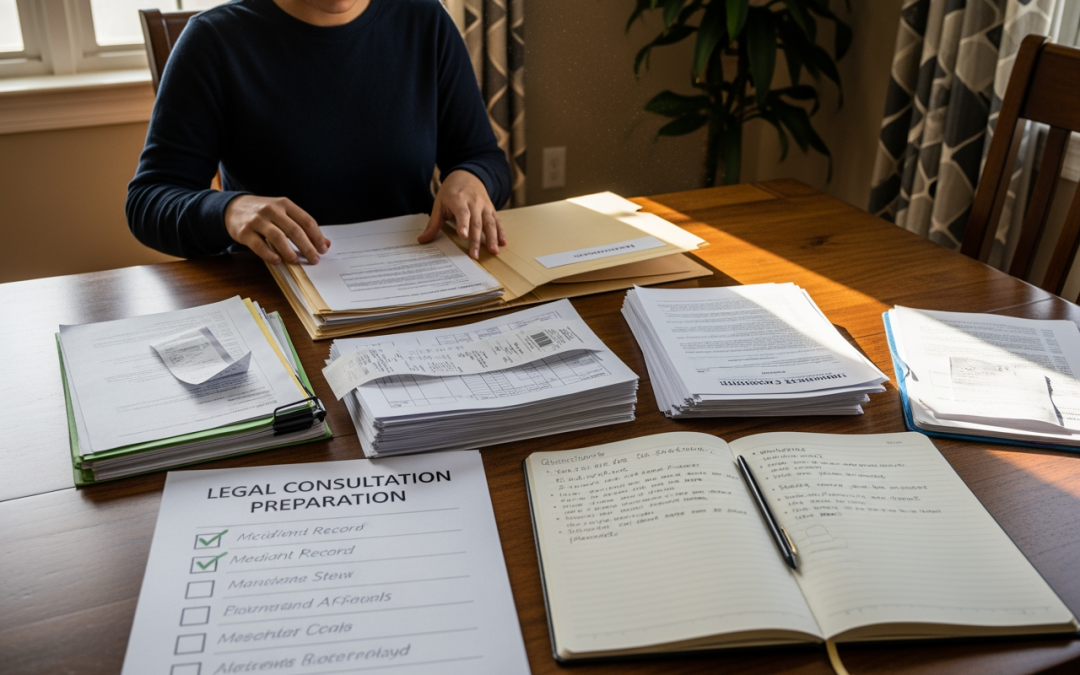
A legal consultation is your first meaningful step toward understanding your rights after an injury. This meeting sets the tone for your entire claim and determines how effectively your lawyer can assess your situation. When you prepare for legal consultation properly, you maximise the value of this crucial appointment and lay the groundwork for a successful claim.
The legal system can feel overwhelming, particularly when you are dealing with physical pain, financial stress, and uncertainty about the future. Many injured people arrive at their first appointment unsure of what to expect or what information matters most. This uncertainty is natural – but it does not have to define your experience. Understanding exactly how to prepare for consultation transforms anxiety into confidence.
Understanding the Purpose of Your Initial Meeting
A legal consultation serves multiple essential functions. Your lawyer evaluates the merits of your potential claim, identifies the legal pathways available, and begins building the strategy that will guide your case forward. You gain clarity about your rights, realistic expectations about outcomes, and professional advice tailored to your specific circumstances.
What Good Preparation Achieves
The quality of this exchange depends heavily on preparation. When you arrive with organised documents and a clear account of events, several practical benefits follow immediately. Accurate assessment becomes possible because complete information allows your lawyer to evaluate your claim thoroughly from the first meeting. Faster progress results because organised documentation means work can begin immediately rather than waiting for missing pieces.
When you prepare for legal consultation effectively, you also reduce legal costs overall – less time spent hunting for information means more time spent on your actual claim. Better outcomes often follow, as strong preparation correlates with stronger claims and better settlement results. Every case is different and specific outcomes depend on individual circumstances, but thorough preparation always improves your starting position.
Knowing What Type of Claim You Have
Before your consultation, it helps to understand which area of personal injury law applies to your situation. Different claim types involve different legal frameworks, timeframes, and compensation structures. A workers compensation claim arising from a workplace accident involves Western Australia’s WorkCover scheme and specific employer obligations. A claim arising from a road accident involves different legislation and insurance arrangements entirely.
Understanding whether your claim falls under workers compensation, motor vehicle injury, or public liability law helps your lawyer identify the right pathway faster – and helps you ask more informed questions during the consultation.
Essential Documents You Need to Gather
Documentation forms the backbone of any personal injury claim. When you prepare for legal consultation, gathering these materials should be your first priority. Start as early as possible, because obtaining some documents takes time.
Medical Evidence and Health Records
Your medical documentation tells the clinical story of your injury. Collect medical certificates issued by your GP, specialist, or hospital since the injury occurred. Gather treatment notes from physiotherapists, psychologists, or other health professionals you have consulted. Obtain diagnostic reports including X-rays, MRI scans, CT scans, ultrasounds, and any other imaging results.
Include prescription records listing medications prescribed, dosages, and duration of use. If you were admitted for treatment, obtain complete hospital discharge summaries. Any documents outlining your recovery programme or future treatment needs should also be included. These records establish the extent of your injuries and link them directly to the incident in question.
Photographic, Official, and Financial Records
Visual documentation captures details that fade from memory. Useful photographs include images of visible injuries taken immediately after the incident and throughout recovery, photographs of the location where the injury occurred, and documentation of damage to vehicles, clothing, or personal property. Photographs from multiple angles and distances provide the most comprehensive documentation.
Official documents – police reports, your employer’s incident records, letters from insurance companies, and WorkCover claim paperwork – carry authority because they are created by neutral third parties at the time of the incident. For car accident injury compensation claims, the police report number and a copy of the full report are essential starting points.
Financial records prove the economic impact of your injury. Collect pay slips showing your income before the injury and records of time off work afterward. Keep receipts for all medical visits, specialist consultations, medications, and travel costs to appointments. These financial records transform your injury from an abstract concept into a measurable economic impact that your lawyer can quantify.
Creating Your Personal Timeline and Incident Summary
Beyond formal documents, your personal account of events provides invaluable context. A well-prepared timeline helps your lawyer understand the sequence of events and identify key moments that strengthen your claim.
Writing Your Account of Events
Create a written chronology starting from shortly before the incident and continuing through to your consultation date. Include the incident itself with exact date, time, and location. Describe what happened, who else was present, and environmental conditions. Document the immediate aftermath – your actions immediately following the incident and who you reported it to.
Record every medical treatment date, every date you took leave from work, modifications to your duties, and communications with your employer. Note when expenses were incurred and when income was lost. Record activities you can no longer perform, assistance you now require, and changes to daily living. Include important communications with insurers, employers, and medical professionals.
This timeline also helps you ensure consistency across all your documents and statements. Inconsistencies – even innocent ones – give insurers ammunition to question credibility. Your written account becomes your reference point for every interaction going forward. For public liability claims involving premises accidents, detailed notes about the hazard, the conditions at the time, and anyone else present are particularly important.
The Critical Importance of Honesty and Full Disclosure
Trust forms the foundation of the lawyer-client relationship. When you prepare for legal consultation, commit to complete honesty. Withholding information – even details that seem minor or embarrassing – can severely damage your claim.
What Must Be Disclosed
Your lawyer can only protect your interests if they know the complete picture. Information that seems irrelevant to you might be legally significant. Details you find embarrassing might be easily explained and managed if disclosed early. Hidden information that surfaces later creates serious problems – it weakens credibility, limits strategic options, and damages negotiating position.
Disclose previous injuries to the same body part now affected, chronic conditions that might influence your current symptoms, past workers compensation claims or personal injury claims, and mental health conditions existing before your current injury. Your lawyer can distinguish between pre-existing conditions and new injuries caused by the incident.
Be upfront about irregular income patterns, side businesses or secondary employment, financial difficulties existing before your injury, and any prior workplace disputes or performance issues. These details help your lawyer anticipate challenges and prepare effective responses before insurers raise them.
Preparing Questions That Get Results
A consultation works both ways. Preparing questions ensures you leave the meeting with clarity about your situation. Ask your lawyer what type of claim applies to your circumstances, what the strongest and most challenging aspects of your claim are, what compensation you may be entitled to, how long the process typically takes, and what happens next if you decide to proceed.
Ask directly about fee arrangements. Conditional fee agreements – commonly known as “no win, no fee” – help injured people access legal representation without upfront costs. Under these arrangements, legal fees are contingent on successfully obtaining compensation. Key features typically include no upfront legal fees, success-based payment, and capped fees that regulations limit to protect your interests.
How to Prepare for Consultation: Special Considerations by Claim Type
Different injury circumstances involve unique considerations. Understanding these distinctions helps you gather the most relevant materials for your specific situation.
Workplace and Motor Vehicle Claims
If your injury occurred at work, additional preparation includes your employment contract, position description, recent pay slips, any safety induction documents or training certificates, your employer’s incident report, and any documents outlining modified duties or graduated return arrangements. Emails or letters about your injury, treatment, or work status are also valuable.
For road accident injuries, essential documentation includes the police report number, insurance details for all vehicles involved, photographs of vehicle damage and road conditions, witness information, and records of emergency department attendance and subsequent treatment.
For claims involving permanent disability or significant lifestyle changes, additional considerations include specialist medical reports, care needs assessments, occupational assessments about work capacity, home modification quotes, and equipment cost estimates. Catastrophic injury compensation claims involve significantly higher compensation amounts and require particularly thorough preparation – the more complete your documentation from the outset, the stronger your claim.
Managing Costs and Understanding Limitation Periods
Time limits apply to personal injury claims in Western Australia. These limitation periods are strict, and missing them can destroy your right to compensation regardless of how strong your case might be. Workers compensation claims generally must be lodged within six months of injury. Motor vehicle accident claims must be notified within 28 days for statutory benefits. Public liability claims generally have three years from the date of injury.
Seeking advice early protects your rights. Even if within the limitation period, waiting reduces options. Evidence deteriorates over time, witnesses become harder to locate, and medical records may be archived or destroyed. Early action consistently strengthens claims and demonstrates seriousness about pursuing compensation.
Separovic Injury Lawyers is a Perth-based personal injury law firm helping injured Western Australians pursue fair compensation for workplace injuries, road accidents, and incidents in public spaces. Our team understands that preparation makes the difference between a productive consultation and a missed opportunity.
Conclusion
The most important step in how to prepare for consultation is actually scheduling one. Delaying action does not serve your interests and may jeopardise your rights. Knowing what documents to gather, what information to disclose, and what questions to ask transforms your first meeting into a productive step toward fair compensation.Whether you have been hurt at work, on the road, or in a public place, thorough preparation combined with expert legal representation gives you the best opportunity to secure the outcome your injuries warrant. For a free initial consultation, reach out to our personal injury lawyers Perth on (08) 9227 1000.