
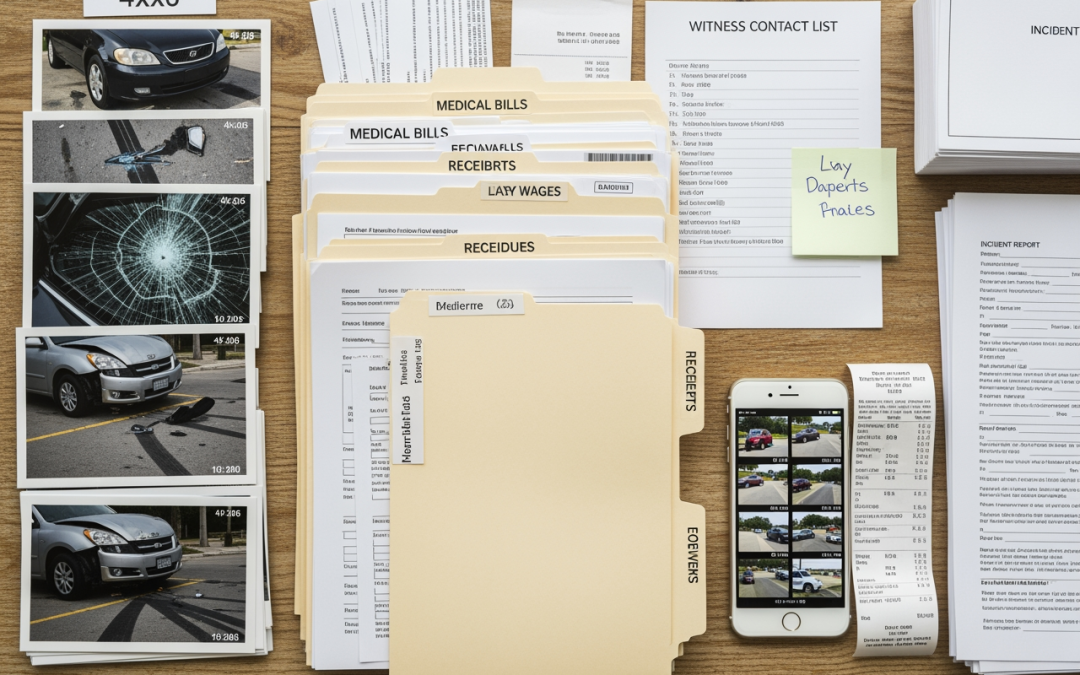
When pursuing compensation for a personal injury, the strength of your gather claim evidence strategy often determines the outcome. Whether you have suffered a workplace injury, been in a motor vehicle accident, or been hurt in a public place, thorough documentation and evidence collection form the foundation of a successful claim.
Many injured claimants underestimate the importance of evidence gathering in the immediate aftermath of an incident. Critical evidence can disappear within hours or days – witness memories fade, physical conditions change, and documentation becomes harder to obtain. This comprehensive guide explains the essential evidence types, documentation strategies, and practical steps that strengthen your compensation claim throughout Perth and Western Australia.
Understanding the Role of Evidence in Compensation Claims
Personal injury claims in Western Australia operate under civil law, requiring claimants to prove their case on the balance of probabilities. This legal standard means you must demonstrate that your version of events is more likely true than not. When you gather claim evidence systematically, you build a compelling narrative that supports every aspect of your claim – from liability to the extent of injuries and financial losses.
Why Evidence Matters Beyond the Courtroom
Strong evidence serves multiple strategic purposes beyond courtroom presentation. Insurance companies assess claims based on the quality and quantity of supporting documentation. Comprehensive evidence packages often lead to earlier, more favourable settlement offers, avoiding protracted negotiations or litigation. Conversely, weak or incomplete evidence invites disputes, delays, and reduced settlement proposals.
Common evidence gathering mistakes significantly weaken otherwise valid claims. Delayed documentation allows insurers to question the severity or causation of injuries. Gaps in medical treatment records suggest injuries are less serious than claimed. Inconsistent statements between incident reports and later testimony create credibility issues that undermine entire claims.
Types of Evidence That Support Your Claim
Successful compensation claims rely on diverse evidence categories, each serving specific purposes. Documentary evidence includes incident reports, employment records, medical certificates, and financial statements. These official documents carry substantial weight because they are created at the time of the incident and often by independent third parties.
Photographic and video evidence provides powerful visual documentation that words cannot replicate. Images of injury sites, hazardous conditions, vehicle damage, or injury progression create tangible proof. Medical records and expert opinions establish the nature, extent, and prognosis of injuries. Witness testimony from independent observers corroborates your version of events and provides crucial third-party verification. For workers compensation claims, co-worker and safety officer testimony often proves decisive in establishing employer negligence.
Immediate Steps After an Injury Incident
Documenting the Scene
The moments immediately following an incident present the most critical evidence gathering opportunity. Physical conditions change rapidly – spills get cleaned, hazards get removed, and CCTV footage gets overwritten. Capturing the scene exactly as it existed during your incident preserves evidence that may otherwise disappear permanently.
Photograph and video the entire area from multiple angles and distances. Wide shots establish context, while close-ups document specific hazards, defects, or dangerous conditions. For car accident injury compensation claims, document vehicle positions, road conditions, traffic control devices, and skid marks before vehicles are moved. Record environmental conditions that contributed to the incident – weather conditions, lighting levels, floor surfaces, and visibility obstructions.
Note the exact date, time, and location with as much specificity as possible. GPS coordinates, street addresses, and landmark references help reconstruct incidents accurately later. If injuries prevent immediate documentation, ask someone present to capture photographs and videos on your behalf.
Obtaining Witness Information
Independent witnesses provide crucial corroboration that strengthens credibility throughout the claims process. Identify anyone who witnessed the actual incident, heard it occur, or arrived immediately afterward. Collect complete contact information from every potential witness while still at the scene – full names, phone numbers, email addresses, and residential or business addresses.
Record witness statements while memories remain fresh and accurate. Even brief written descriptions of what witnesses observed carry significant weight when created within hours or days of incidents. Avoid coaching witnesses or suggesting what they should have seen. Authentic, independent observations hold far more value than testimony that appears rehearsed or influenced.
Reporting the Incident Formally
Formal incident reporting creates official documentation that forms the foundation of your claim. Workplace injuries require notification to employers and completion of incident report forms under Western Australian workers compensation legislation. Report workplace injuries immediately, even if they initially seem minor – symptoms often worsen over subsequent hours or days.
Motor vehicle accidents require police attendance when injuries occur or where vehicles cannot be driven safely. Police reports document the scene, parties involved, witness information, and preliminary fault assessments. Public liability incidents occurring on business premises or public property require formal reporting to property owners or managers. Insist on completing incident reports yourself where possible, and always request copies for your own records.
Gathering Medical Evidence to Support Your Claim
Seeking Immediate Medical Attention
Prompt medical assessment following injury serves both health and legal purposes. Immediate treatment establishes contemporaneous documentation linking injuries directly to the incident. Delayed medical treatment allows insurers to question whether injuries actually resulted from the incident or developed from unrelated causes.
Describe all symptoms thoroughly during initial medical assessments, even those that seem minor or unrelated. Pain that initially seems manageable often intensifies over subsequent days. Psychological symptoms like anxiety, sleep disturbance, or mood changes frequently emerge after physical symptoms stabilise. Comprehensive initial documentation prevents insurers from arguing that later-reported symptoms are new conditions unrelated to your incident.
Follow all treatment recommendations consistently throughout your recovery. Gaps in treatment attendance or failure to follow medical advice provide insurers with arguments that injuries were not as serious as claimed or that you failed to mitigate damages.
Maintaining Comprehensive Medical Records
Medical records constitute the most critical evidence category in personal injury claims. Request and retain copies of all medical documentation – GP visit notes, specialist consultation reports, diagnostic test results, imaging studies, hospital admission records, and physiotherapy or rehabilitation notes.
Specialist consultations provide expert opinions about injury causation, prognosis, treatment requirements, and permanent impairment. Document how injuries affect daily activities, work capacity, and quality of life. Keep a detailed injury diary recording pain levels, functional limitations, medication side effects, and psychological impacts. For public liability claims, this ongoing diary is particularly valuable in demonstrating the lasting consequences of premises-related accidents.
This contemporaneous documentation prevents memory gaps when completing statutory declarations or providing information months or years later.
Financial and Economic Evidence
Tracking Lost Income and Earning Capacity
Financial losses from injuries extend beyond immediate lost wages. Comprehensive documentation of economic impact includes current lost income, reduced earning capacity, lost career opportunities, and diminished retirement savings. Employment records, tax returns, pay slips, and employer statements establish your pre-injury earning history.
Maintain detailed records of all time off work, including full days missed, partial days worked, and modified duties periods. Document conversations with employers about return-to-work difficulties, workplace modifications needed, or inability to perform previous duties. Future economic loss calculations require expert economic and vocational assessment – these convert abstract concepts of diminished earning capacity into specific dollar amounts supporting your claim.
Self-employed claimants face additional documentation challenges. Business records, tax returns, bank statements, and client testimonials establish pre-injury income levels. Document business opportunities lost, contracts declined, and clients lost due to injury-related incapacity.
Documenting Out-of-Pocket Expenses
Every injury-related expense deserves documentation for potential reimbursement. Medical and rehabilitation costs accumulate rapidly – GP visits, specialist consultations, diagnostic tests, physiotherapy sessions, prescription medications, and medical aids all constitute compensable expenses. Retain receipts, invoices, and credit card statements documenting every medical expense.
Travel costs for medical treatment add up significantly over extended recovery periods. Calculate mileage for travel to appointments, or retain fuel receipts if claiming actual costs. Home modification expenses often follow serious injuries. Care and assistance costs also warrant careful documentation – even care provided by family members without charge carries compensable value.
For catastrophic injury compensation claims, life care planning that documents all future medical, therapeutic, care, and support needs over life expectancy creates the concrete financial projections needed to support large compensation claims.
Preserving Physical Evidence and Digital Records
Physical Evidence Preservation
Physical evidence of incidents provides tangible proof that photographic documentation alone cannot replicate. Damaged vehicles in motor vehicle accidents should be preserved until insurance assessments are complete and legal advisors confirm preservation is no longer necessary.
Clothing worn during incidents, particularly workplace accidents, may contain crucial evidence – torn clothing demonstrates force involved, and staining can prove exposure. Preserve clothing items in paper bags until legal advisors review their evidentiary value. Equipment involved in workplace injuries should be photographed thoroughly – defective machinery, broken safety equipment, or faulty tools may prove employer negligence.
Digital Evidence and Social Media Pitfalls
Email communications constitute discoverable evidence in legal proceedings. Preserve all email correspondence related to your incident, medical treatment, employment impacts, and insurance communications. Email trails with insurers document claim handling conduct, settlement offers, and denied benefits.
Social media posts become evidence in compensation claims. Insurers routinely monitor claimants’ public social media profiles seeking contradictory content. Posts showing physical activities inconsistent with claimed limitations, or cheerful updates contradicting depression claims, can undermine compensation entitlements. The safest approach involves avoiding social media discussion of injuries, treatment, limitations, or claim proceedings entirely during active claims.
Separovic Injury Lawyers is a Perth-based personal injury law firm assisting injured people across Western Australia with workers compensation, car accident, public liability, and catastrophic injury claims. Our experienced team guides claimants through evidence collection, identifies critical gaps, and arranges specialist assessments that strengthen claims.
Common Evidence Gathering Mistakes to Avoid
Delays and Inconsistencies
Time erodes evidence quality rapidly. Photograph injuries immediately – bruising peaks and then fades, swelling resolves, and visible injury evidence diminishes. Scene conditions change quickly – spills get cleaned, defects get repaired, and hazards get remediated.
Inconsistencies between incident reports, medical records, witness statements, and later testimony create credibility problems insurers exploit. Review early documentation before providing additional statements to ensure consistency. Genuine memory errors or new information deserve acknowledgment rather than concealment – attempted deception causes far more damage than honest mistakes.
Incomplete Financial Documentation
Incomplete financial documentation prevents full compensation recovery. Every medical expense, lost wage amount, and injury-related cost deserves documentation. Missing receipts or incomplete records leave money on the table – insurers only compensate documented losses.
Delayed incident reporting allows employers and insurers to question whether incidents actually occurred as described. Even if you initially believe injuries are minor, report incidents promptly – many serious conditions develop gradually from initially minor symptoms.
Conclusion
Successfully gathering claim evidence and preserving it systematically transforms compensation claims from uncertain prospects into well-supported legal cases. Systematic documentation beginning immediately after incidents, comprehensive medical records, thorough financial tracking, and preservation of physical and digital evidence create powerful claim foundations that withstand insurer scrutiny. The evidence gathering process can feel overwhelming while managing injury recovery and financial pressures. Expert Perth compensation lawyers guide claimants through evidence collection, identify critical gaps, and arrange specialist assessments that strengthen claims. For a free initial consultation, contact our compensation lawyers today on (08) 9227 1000.