
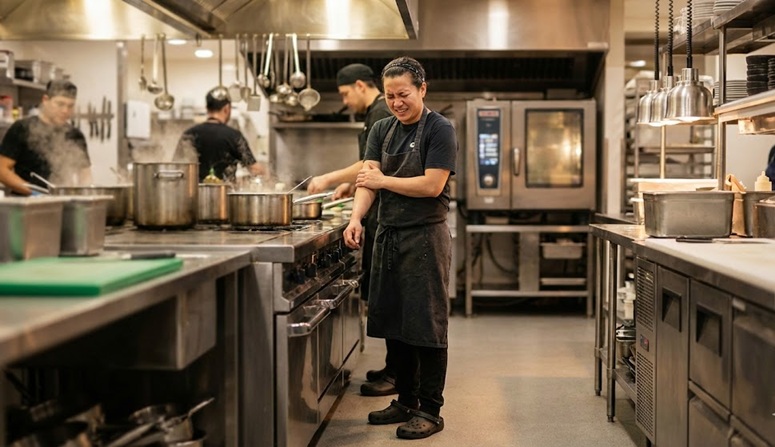
Western Australia’s hospitality sector employs over 90,000 workers across restaurants, cafes, hotels, and catering services. Behind the polished dining experiences and efficient service lies a workplace reality marked by intense physical demands, fast-paced environments, and significant injury risks. Kitchen staff face scalding liquids and open flames daily, while floor staff navigate slippery surfaces carrying heavy trays during peak service hours.
The data tells a stark story. WorkCover WA statistics show that hospitality workers file thousands of compensation claims each year, with burns, slips, and repetitive strain injuries dominating the figures. These aren’t minor inconveniences – they’re injuries that force experienced chefs out of kitchens for months, leave servers unable to work through chronic pain, and sometimes end careers entirely.
If injured while working in Perth’s hospitality industry, workers have specific rights under Western Australian workers’ compensation laws. We’ve helped countless hospitality workers navigate these claims successfully, securing compensation for medical treatment, lost wages, and ongoing rehabilitation needs.
The Reality of Hospitality Work Injuries in Perth
Perth’s hospitality sector operates under unique pressures that directly contribute to workplace injuries. The combination of split shifts, weekend and evening work, and seasonal peaks creates conditions where fatigue and rushing become standard rather than exceptional.
Restaurant and cafe workers face multiple hazards simultaneously. A chef might work a 12-hour shift managing six burners, multiple ovens, and deep fryers while coordinating with other staff in cramped kitchen spaces. Front-of-house staff walk thousands of steps per shift, often carrying weights that exceed safe lifting guidelines, on floors that become hazardous when wet.
The most common hospitality worker injuries include:
- Thermal burns from cooking equipment, hot liquids, and steam
- Slip and fall injuries on wet or greasy floors
- Repetitive strain injuries affecting wrists, shoulders, and backs
- Cuts and lacerations from knives and broken glassware
- Crushing injuries from heavy equipment or falling objects
These injuries don’t just happen to inexperienced workers. We’ve represented head chefs with 20 years’ experience who suffered career-ending burns, and veteran servers whose bodies finally gave out after years of repetitive strain.
Burns in Commercial Kitchens: More Than Surface Wounds
Commercial kitchens operate at temperatures and speeds that would shock most people unfamiliar with the industry. Deep fryers maintain oil at 180-190°C, ovens run at 250°C or higher, and pressure cookers release superheated steam capable of causing third-degree burns in seconds.
Common burn scenarios in Perth hospitality venues include:
- Splashing oil from deep fryers during busy service periods
- Contact burns from oven doors, hot pans, and grill surfaces
- Steam burns when opening pressure cookers or lifting pot lids
- Scalding from boiling water and hot liquids
- Chemical burns from industrial cleaning products
The severity of these burns often gets underestimated initially. A chef might continue working through their shift with what appears to be a minor burn, only to discover hours later that they’ve suffered a serious second-degree injury requiring extensive medical treatment.
One client, a sous chef at a popular Northbridge restaurant, suffered severe burns to both forearms when a pot of boiling stock tipped during service. The initial emergency department visit revealed second-degree burns covering 15% of his body. What followed was eight weeks off work, multiple skin graft procedures, ongoing physiotherapy, and permanent scarring that affected his confidence and career trajectory.
Slip and Fall Injuries: The Hidden Epidemic
Walk into any commercial kitchen during peak service and the reason slip and fall injuries represent the single largest category of hospitality worker injuries becomes clear. Floors become coated with water, oil, food debris, and cleaning products throughout each shift. Staff move quickly between stations, often carrying items that block their view of the floor surface.
Australian Bureau of Statistics data shows that hospitality workers experience slip and fall injuries at rates significantly higher than most other industries. These aren’t just minor tumbles – they result in broken bones, head injuries, spinal damage, and torn ligaments that can sideline workers for months.
High-risk areas for slips and falls include:
- Kitchen floors near dishwashing stations and prep areas
- Bar areas where spilled drinks create slippery surfaces
- Cold rooms where condensation creates ice patches
- Loading docks and storage areas with uneven surfaces
- Dining areas during busy service when spills aren’t immediately cleaned
We represented a waitress who slipped on an unmarked wet floor in a Perth CBD restaurant, suffering a fractured wrist and severe ankle sprain. Her employer had failed to provide adequate non-slip footwear or implement proper floor maintenance protocols. Through her workers compensation claim, she received full compensation for medical expenses, 18 weeks of lost wages, and ongoing physiotherapy costs.
The impact extended beyond physical injuries. She developed anxiety about returning to work, fearing another fall. This psychological component became part of her compensation claim, highlighting how workplace injuries affect workers on multiple levels.
Repetitive Strain: The Slow-Building Crisis
Unlike sudden injuries from burns or falls, repetitive strain injuries develop gradually over months or years. They’re the cumulative result of performing the same movements thousands of times – chopping vegetables, carrying trays, pulling espresso shots, washing dishes, or kneading dough.
By the time most hospitality workers seek medical attention for repetitive strain, they’ve already been working through pain for weeks or months. They’ve taken over-the-counter painkillers, used heat packs at home, and pushed through discomfort because they need the income or don’t want to let their team down during busy periods.
Common repetitive strain injuries in hospitality include:
- Carpal tunnel syndrome from repetitive wrist movements
- Rotator cuff injuries in shoulders from overhead reaching and lifting
- Lower back strain from prolonged standing and lifting
- Tendonitis in wrists, elbows, and shoulders
- Plantar fasciitis from standing on hard surfaces for extended periods
A barista we represented developed severe carpal tunnel syndrome after two years of pulling espresso shots at a high-volume Perth cafe. She was making up to 300 coffees per shift, performing the same wrist motion repeatedly without adequate breaks. The condition progressed until she couldn’t grip a portafilter without sharp pain shooting up her arm.
Her employer initially dismissed her concerns, suggesting she was exaggerating minor discomfort. Medical imaging revealed significant nerve compression requiring surgical intervention. She was off work for three months and required extensive occupational therapy to regain full function. Her workers’ compensation claim covered all medical costs, lost wages during recovery, and a lump sum payment for permanent impairment.
Your Rights Under WA Workers’ Compensation Law
Western Australian hospitality workers have strong protections under the Workers’ Compensation and Injury Management Act 1981. If injured at work, they’re entitled to specific benefits regardless of who was at fault for the injury.
Entitlements typically include:
- Medical expenses: All reasonable treatment costs including GP visits, specialists, surgery, physiotherapy, and prescribed medications
- Weekly payments: Compensation for lost wages while unable to work, calculated based on pre-injury earnings
- Rehabilitation support: Occupational therapy, vocational retraining, and return-to-work programs
- Lump sum payments: For permanent impairment resulting from workplace injuries
Time limits apply to these claims. Workers must notify employers of injuries as soon as practicable and lodge workers’ compensation claims within strict timeframes. Missing these deadlines can jeopardise entire claims.
Many hospitality workers worry about job security when making claims. Western Australian law prohibits employers from dismissing or discriminating against workers who file legitimate compensation claims. If facing retaliation, additional legal remedies become available.
When Employer Negligence Increases Your Compensation Options
While workers’ compensation provides baseline support, some workplace injuries result from serious employer negligence that goes beyond normal workplace risks. When employers fail to meet basic safety obligations, injured workers may have grounds for additional common law damages claims.
Examples of negligence in hospitality settings include:
- Failing to provide proper safety equipment like non-slip footwear or protective clothing
- Not maintaining equipment in safe working condition
- Ignoring known hazards like damaged flooring or faulty equipment
- Inadequate staff training on safe work procedures
- Forcing workers to perform unsafe tasks under time pressure
We handled a case where a kitchen hand suffered severe burns because his employer had disabled safety features on a commercial fryer to speed up service. The employer knew the equipment was dangerous but prioritised efficiency over worker safety. This clear negligence allowed us to pursue a substantial common law damages claim in addition to standard workers’ compensation.
The difference in compensation can be significant. While workers’ compensation covers actual losses like medical bills and lost wages, common law claims can include compensation for pain and suffering, loss of future earning capacity, and the overall impact on quality of life.
The Claims Process: What Hospitality Workers Need to Know
Making a workers’ compensation claim while working in hospitality presents unique challenges. Many workers are casual employees who fear losing shifts if they complain. Others work for small businesses where they have personal relationships with owners, making formal claims feel uncomfortable.
The essential steps for protecting rights include:
- Report the injury immediately: Notify supervisors or managers as soon as injuries occur, even if they seem minor initially
- Seek medical attention: Visit a GP or emergency department promptly, and ensure doctors document that injuries are work-related
- Document everything: Keep records of incidents, witness names, photos of hazards, and all medical reports
- Lodge claims formally: Submit workers’ compensation claim forms to employers within required timeframes
- Get legal advice early: Contact us for free assessments before accepting any settlement offers
Insurance companies representing employers often try to minimise compensation payments. They might question whether injuries truly occurred at work, suggest pre-existing conditions caused problems, or pressure workers to return to work before they’re medically ready.
Having experienced legal representation levels the playing field. We deal with insurers daily and know their tactics. More importantly, we understand the specific medical evidence needed to prove hospitality injury claims and can connect workers with specialists who regularly treat people in this industry.
Real-World Outcomes: Cases We’ve Won for Perth Hospitality Workers
The abstract discussion of rights and entitlements becomes concrete through actual results. Over the past decade, Separovic Lawyers has secured millions in compensation for injured hospitality workers across Perth.
A head chef at a Fremantle restaurant suffered a severe back injury when a faulty coolroom shelf collapsed, dropping 40kg of frozen stock onto him. His employer’s insurer initially offered just 12 weeks of wage compensation and basic medical coverage. We proved the employer had ignored previous complaints about the dangerous shelving and secured a settlement covering two years of lost wages, extensive rehabilitation, retraining for a less physical career, and a substantial lump sum for permanent impairment.
A cocktail bartender developed chronic shoulder tendonitis from repetitive overhead reaching in a poorly designed bar setup. Her employer claimed she was simply unfit for the work. Medical evidence showed the bar’s design violated ergonomic standards and created unnecessary strain. We obtained full compensation for her medical treatment, lost wages during recovery, and funds for workplace modifications that allowed her to continue in the industry she loved.
These outcomes weren’t automatic. They required thorough investigation, expert medical evidence, and persistent advocacy against insurers who initially denied or minimised these claims.
Why Legal Representation Matters for Hospitality Claims
Workers’ compensation claims might seem straightforward on the surface, but hospitality injury cases often involve complex medical questions, disputed facts about how injuries occurred, and aggressive insurance company tactics designed to reduce payouts.
Professional legal representation provides:
- Accurate claim valuation: We calculate the full value of claims including future costs many workers don’t consider
- Medical evidence gathering: We work with specialists who understand hospitality injuries and can provide compelling expert reports
- Negotiation leverage: Insurance companies take claims more seriously when experienced lawyers represent injured workers
- Protection from mistakes: Simple errors in paperwork or missed deadlines can destroy otherwise valid claims
We operate on a no-win, no-fee basis for most injury claims. This means workers don’t pay legal fees unless we successfully secure compensation. There’s no financial risk in getting expert advice about rights.
Many injured hospitality workers assume they can’t afford lawyers or that their injuries aren’t serious enough to warrant legal help. The reality is that even seemingly minor injuries can have long-term consequences, and early legal advice often prevents problems that would otherwise derail claims.
Moving Forward After a Hospitality Workplace Injury
Workplace injuries disrupt every aspect of life. The immediate pain and medical treatment are just the beginning. Lost income strains household budgets, relationships suffer under financial pressure, and uncertainty about recovery timelines creates constant anxiety.
Workers might be wondering whether they’ll heal completely, whether they can return to jobs they know, or whether injuries will affect their careers long-term. These are legitimate concerns that deserve honest answers based on proper medical assessment and legal advice.
Perth’s hospitality industry needs experienced workers. The skills developed over years in kitchens and front-of-house roles have real value. Proper compensation following workplace injuries should support recovery, replace lost income, and provide resources for retraining if workers can’t return to previous roles.
Taking the Next Step
If injured working in Perth’s hospitality industry, workers face important decisions in the coming days and weeks. The choices made now about medical treatment, reporting injuries, and pursuing compensation will affect financial security and recovery for months or years to come.
We’ve helped hundreds of hospitality workers navigate these challenges successfully. We understand the physical demands of this work, the common injury patterns in restaurants and cafes, and the specific medical evidence needed to prove these claims. Our team knows how to deal with employers who might be dismissive and insurers who try to minimise legitimate injuries.
The first step is understanding rights and options through a free, confidential assessment of situations. We’ll review circumstances of injuries, explain what compensation workers are entitled to claim, and outline the process ahead. There’s no obligation and no cost for this initial consultation.
Whether dealing with burns, a slip and fall, or repetitive strain making it impossible to continue working, we can help workers understand their rights and pursue the full hospitality worker compensation Perth they deserve under Western Australian law.
Don’t let concerns about job security or employer relationships prevent workers from protecting their rights. The law exists to support injured workers, and experienced workplace injury lawyers are here to ensure they receive every benefit they’re entitled to claim.
Contact us for a free assessment to discuss hospitality workplace injuries and claim options available under WA law.