
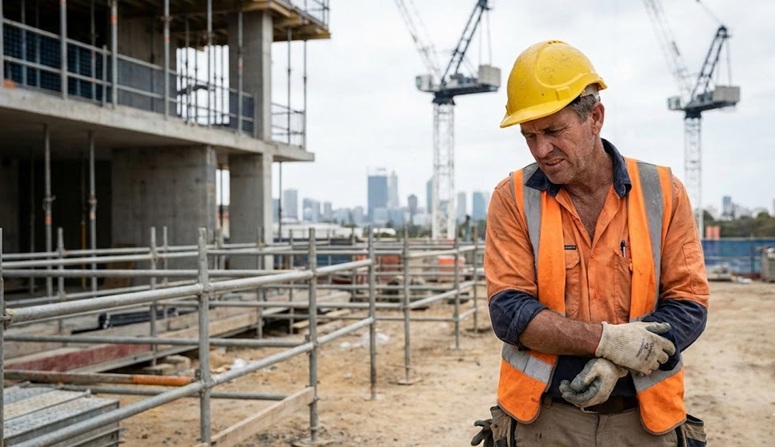
Construction sites across Perth present some of the most hazardous working conditions in Western Australia. Workers face daily exposure to heavy machinery, heights, electrical systems, and unstable structures. When injuries occur, understanding your entitlements under workers compensation Perth laws becomes critical to your recovery and financial security.
The construction industry accounts for a disproportionate number of workplace injuries in WA. In 2022, WorkCover WA reported that construction workers lodged over 3,400 claims for work-related injuries – representing nearly 15% of all claims despite the sector employing just 9% of the workforce. These statistics underscore a simple truth: construction work carries inherent risks that demand robust legal protections.
The Most Common Construction Injuries in Perth
Construction sites generate predictable injury patterns. Understanding these common incidents helps workers recognise when they have legitimate workers compensation claims and what compensation they might expect.
Falls from Heights
Falls remain the leading cause of serious injury and death on construction sites. Scaffolding collapses, ladder failures, and unprotected roof edges account for dozens of severe injuries each year across Perth construction projects.
These incidents typically result in spinal injuries, traumatic brain injuries, fractured bones, and internal organ damage. The consequences often extend beyond initial hospitalisation, requiring months or years of rehabilitation and potentially permanent disability.
Struck-By Incidents
Construction workers regularly operate near heavy machinery, vehicles, and falling objects. Being struck by equipment, materials, or tools causes devastating injuries including:
- Crush injuries requiring amputation
- Severe head trauma
- Multiple fractures
- Internal bleeding
A recent case involved a Perth worker struck by a reversing excavator on a residential development site. The worker suffered pelvic fractures and internal injuries requiring three surgeries and eight months off work.
Caught-In or Between Accidents
Workers become trapped between machinery, vehicles, or collapsing structures with alarming frequency. These accidents compress body parts, causing crush injuries, severed limbs, and asphyxiation.
Trench collapses represent a particularly dangerous subset of these incidents. When excavation walls fail, workers face burial under tonnes of soil and rock. Survival often depends on immediate emergency response, but permanent injuries are common.
Electrical Injuries
Construction sites expose workers to live electrical systems during installation, renovation, and demolition work. Contact with power lines, faulty equipment, or inadequate lockout procedures causes severe burns, cardiac arrest, and neurological damage.
Even non-fatal electrical shocks can produce lasting complications including chronic pain, cognitive impairment, and psychological trauma.
Repetitive Strain and Overexertion
Not all construction injuries occur in dramatic accidents. Years of manual labour produce chronic back injuries, shoulder damage, knee deterioration, and carpal tunnel syndrome.
These gradual injuries deserve the same legal protection as acute accidents. If your condition developed through work activities, you have the right to claim compensation regardless of whether a single incident caused the harm.
Respiratory Conditions
Construction workers inhale dangerous substances including asbestos fibres, silica dust, chemical fumes, and metal particles. These exposures cause asbestosis, silicosis, chronic obstructive pulmonary disease, and various cancers.
Respiratory diseases often take years or decades to manifest symptoms. WA law recognises these delayed conditions, allowing workers to claim compensation long after exposure occurred.
Your Rights Under Workers’ Compensation Law in WA
Western Australia’s workers’ compensation system provides specific entitlements to injured construction workers. Understanding these rights ensures you receive everything the law guarantees.
Automatic Coverage for Construction Workers
If you work in construction in Western Australia, your employer must maintain workers’ compensation insurance. This requirement applies regardless of whether you work full-time, part-time, or casual hours.
Coverage extends to:
- Direct employees of construction companies
- Labour hire workers placed on construction sites
- Apprentices and trainees
- Some categories of contractors (depending on specific arrangements)
You don’t need to prove your employer was negligent to access workers compensation benefits. The system operates on a no-fault basis – your entitlement exists simply because your injury arose from your employment.
Medical and Rehabilitation Expenses
Workers’ compensation covers all reasonable medical treatment related to your work injury. This includes:
- Emergency department treatment
- GP and specialist consultations
- Surgery and hospitalisation
- Physiotherapy and occupational therapy
- Psychology and counselling services
- Medications and medical equipment
- Travel costs to attend medical appointments
Treatment coverage continues for as long as your injury requires ongoing care. We’ve assisted clients whose treatment extended for years following severe construction accidents, with WorkCover covering hundreds of thousands of dollars in medical costs.
Weekly Payments for Lost Wages
When your injury prevents you from working, workers compensation provides weekly payments to replace your lost income. The calculation depends on your pre-injury earnings and your capacity to work following the injury.
For the first 13 weeks, you receive approximately 100% of your average weekly earnings. After 13 weeks, payments reduce to approximately 85% of your pre-injury earnings if you remain totally incapacitated for work.
These payments continue until you either return to suitable employment or reach maximum medical improvement. In cases of permanent total incapacity, weekly payments may continue indefinitely.
Lump Sum Compensation for Permanent Impairment
If your construction workers compensation Perth claim involves permanent impairment, you can claim a lump sum payment separate from your weekly payments and medical coverage. The amount depends on the degree of permanent impairment assessed by an approved medical practitioner.
WA law uses a percentage scale to rate permanent impairment. Higher percentages produce larger lump sum payments, with maximum amounts exceeding $200,000 for the most severe impairments.
Common permanent impairments in construction workers include:
- Spinal injuries affecting mobility
- Limb amputations or loss of function
- Hearing loss from noise exposure
- Respiratory conditions from dust exposure
- Psychological injuries including PTSD
Common Law Damages for Negligent Injuries
Workers’ compensation provides baseline support, but it doesn’t fully compensate serious injuries caused by negligence. When your employer, another company, or a third party’s negligence contributed to your injury, you may pursue common law damages beyond standard workers’ compensation.
Common law claims can recover compensation for:
- Pain and suffering
- Economic loss exceeding workers’ compensation limits
- Future medical expenses
- Loss of earning capacity over your working life
- Domestic assistance and care needs
These claims require proving negligence – a more complex legal process than standard workers compensation claims. However, successful common law claims often deliver substantially larger compensation amounts, particularly for severe injuries with long-term consequences.
Time Limits for Construction Workers’ Compensation Claims
Western Australian law imposes strict deadlines for reporting injuries and lodging claims. Missing these deadlines can forfeit your entire entitlement, regardless of how legitimate your claim might be.
Immediate Reporting Requirements
You must notify your employer of your work injury as soon as practicable after it occurs. For acute injuries from accidents, this typically means reporting the incident on the same day or within 24 hours.
Provide written notice when possible, even if you initially report the injury verbally. This creates a paper trail documenting when your employer learned of the incident.
Six-Month Claim Deadline
You must lodge your formal workers’ compensation claim within six months of your injury occurring. This deadline applies regardless of whether you’ve returned to work or are still receiving treatment.
For gradual onset injuries or diseases, the six-month period begins when you first became aware (or should reasonably have become aware) that your condition related to your employment.
Three-Year Common Law Limitation Period
If you’re considering a common law damages claim for negligence, you face a three-year limitation period from the date of injury. This deadline operates independently from workers’ compensation deadlines.
Courts rarely extend this limitation period. Once three years pass, you permanently lose your right to pursue common law damages, even if you have a strong negligence case.
Steps to Take After a Construction Site Injury
Your actions immediately following a workplace injury significantly impact your claim’s success. Follow these steps to protect your legal rights.
Seek Immediate Medical Attention
Your health takes absolute priority over claim considerations. Seek emergency treatment for serious injuries without delay. For less severe injuries, visit your GP or a medical centre as soon as possible.
Medical records created shortly after your injury provide crucial evidence linking your condition to the workplace incident. Delayed treatment creates opportunities for insurance companies to argue your injury wasn’t work-related or was less severe than claimed.
Report the Injury in Writing
Provide written notice to your employer describing:
- The date, time, and location of the incident
- How the injury occurred
- The body parts affected
- Any witnesses to the incident
Keep a copy of this written notice for your records. If your employer refuses to accept written notice, send it via email or registered post to create proof of delivery.
Document Everything
Gather and preserve evidence supporting your claim:
- Photographs of the accident scene, equipment involved, and your injuries
- Names and contact details of witnesses
- Copies of all medical reports and treatment records
- Records of time off work and lost wages
- Correspondence with your employer and insurance companies
This documentation becomes invaluable if disputes arise about how your injury occurred or the extent of your impairment.
Lodge Your Claim Promptly
Don’t wait to see if you’ll recover before lodging your claim. Submit your workers’ compensation claim form to your employer as soon as possible after your injury. Your employer must forward this claim to their insurance company within seven days.
Early lodgement protects your entitlements and starts the claims process, ensuring you receive weekly payments and medical coverage without unnecessary delays.
Seek Legal Advice Early
Insurance companies employ experienced claims managers and lawyers working to minimise payouts. You deserve equally experienced representation protecting your interests.
Contact us for a free assessment of your construction workers compensation Perth claim. We explain your entitlements, handle all communication with insurance companies, and ensure you receive maximum compensation under WA law.
When to Consider Legal Representation
Many straightforward workers’ compensation claims proceed smoothly without legal involvement. However, certain situations demand experienced legal representation to protect your rights.
Your Claim Has Been Denied or Disputed
Insurance companies regularly deny legitimate claims or dispute the extent of injuries. Common reasons for denial include:
- Allegations the injury didn’t occur at work
- Claims you failed to report the injury within required timeframes
- Arguments that a pre-existing condition caused your symptoms
- Disputes about whether you’re genuinely incapacitated for work
If your claim faces denial or dispute, legal representation becomes essential. We challenge unfair decisions, gather additional evidence, and represent you in conciliation and arbitration proceedings.
Your Injury Is Severe or Permanent
Serious construction injuries producing permanent impairment or long-term disability require careful legal management. The compensation difference between adequate and inadequate representation often exceeds hundreds of thousands of dollars.
We ensure medical assessments accurately reflect your impairment level, calculate your full entitlement to weekly payments and lump sum compensation, and assess whether a catastrophic injury compensation claim would deliver additional compensation.
Multiple Parties May Be Liable
Construction sites involve numerous companies – head contractors, subcontractors, equipment suppliers, and property owners. When multiple parties contributed to your injury through negligence, identifying all liable parties maximises your compensation.
We investigate the circumstances surrounding your injury, identify all potentially liable parties, and pursue claims against everyone whose negligence contributed to your harm through public liability avenues where appropriate.
You’re Unsure About Your Entitlements
Workers’ compensation law contains complex provisions affecting your entitlements. Seemingly minor details about your employment status, the circumstances of your injury, or your medical treatment can significantly impact your claim.
A free consultation with our team clarifies your entitlements, explains the claims process, and identifies strategies to maximise your compensation. We operate on a no win, no fee basis for most claims, meaning you pay nothing unless we secure compensation for you.
How Separovic Lawyers Helps Construction Workers
We’ve built our practice around a simple principle: injured workers deserve fierce advocacy from lawyers who understand their challenges and fight relentlessly for their rights.
Our team handles every aspect of your workers compensation claim, including:
- Lodging your initial claim and managing all paperwork
- Communicating with insurance companies on your behalf
- Arranging independent medical assessments
- Calculating your full entitlement to compensation
- Negotiating settlements or representing you in disputes
- Pursuing common law damages claims when negligence occurred
We’ve recovered millions of dollars for injured construction workers across Perth and Western Australia. Our clients receive personalised attention from experienced lawyers who return calls promptly, explain legal developments in plain language, and treat every case with the urgency it deserves.
Conclusion
Construction work in Perth comes with inherent dangers that place workers at constant risk of serious injury. When accidents occur, Western Australia’s workers’ compensation system provides crucial financial support through medical coverage, weekly payments, and lump sum compensation for permanent impairments.
Understanding your legal rights ensures you receive every dollar the law entitles you to claim. Report injuries immediately, seek prompt medical treatment, document everything, and lodge your claim within required timeframes. These steps protect your compensation entitlements and create the foundation for successful claims.
Separovic Lawyers has represented hundreds of injured construction workers throughout Perth and Western Australia. We’ve seen firsthand how a single workplace incident can derail careers, strain family finances, and create uncertainty about the future. This article explains the most common construction workers compensation Perth injuries, your legal rights under WA law, and the steps you must take to protect your entitlements.
For severe injuries, disputed claims, or situations involving negligence, experienced legal representation makes the difference between adequate compensation and life-changing financial recovery. Don’t navigate this complex system alone while recovering from injury and managing financial pressures.Contact us for a free, no-obligation assessment of your construction injury claim. We’ll explain your rights, answer your questions, and outline the steps needed to secure the compensation you deserve. Your focus should remain on recovery – we’ll handle everything else.