
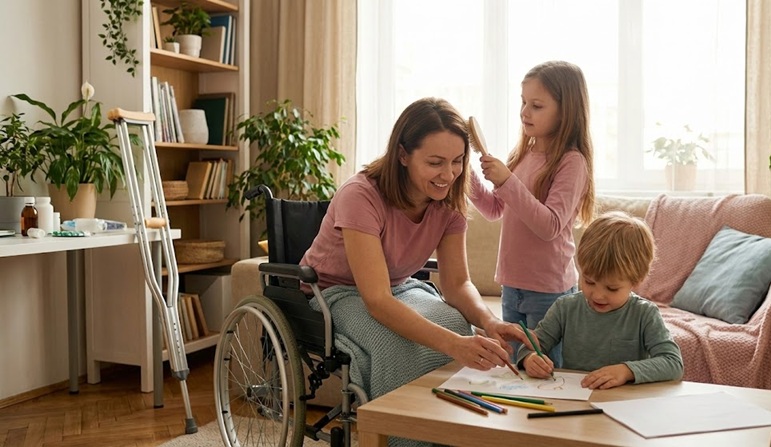
When a parent suffers a serious injury, the impact extends far beyond medical bills and lost income. Children watch their parent struggle through recovery. They adapt to new limitations and navigate financial stress. These experiences shape a child’s emotional wellbeing, academic performance, and sense of security in lasting ways.
Many families don’t realise that compensation claims in Western Australia can extend to cover support for children. Psychological counselling, educational assistance, and practical care arrangements are all potentially claimable. Understanding what you’re entitled to helps you secure comprehensive support for your whole family.
The Hidden Impact on Children When Parents Are Injured
How Children Respond to Parental Injury
Children respond to parental injury in ways that often go unnoticed at first. A seven-year-old might start bedwetting again after seeing their father in a wheelchair. A teenager might abandon university plans to help care for siblings. These changes aren’t dramatic – they’re gradual shifts that compound over time.
Research from Perth’s Telethon Kids Institute shows children of catastrophically injured parents experience elevated rates of anxiety, depression, and academic decline. The stress shows up differently at different ages. Young children struggle with separation anxiety and behavioural changes. School-aged children often experience concentration difficulties and social withdrawal. Adolescents may take on inappropriate caring roles or develop mental health challenges of their own.
The financial dimension makes things harder. When a parent’s injury reduces household income by 40-60%, children feel the impact immediately. School excursions become unaffordable. Tutoring stops. Sports programs end. These losses create social isolation at exactly the time children need peer support most.
Why These Impacts Belong in a Compensation Claim
Western Australian law acknowledges that serious injuries affect entire families. Catastrophic injury compensation claims can extend beyond the injured person’s direct medical needs to include the psychological and educational support children require to maintain stability and development.
Understanding these entitlements is the first step. With the right documentation and legal support, injured parents can secure comprehensive care for their children – not just for themselves.
What Compensation Can Cover for Affected Children
Psychological Counselling Services
Children may need regular therapy sessions with psychologists specialising in childhood trauma and family adjustment. Compensation can cover individual therapy sessions (typically $180-250 per session), family counselling, group therapy programs, and crisis intervention services.
Keep every receipt and invoice. These records form the foundation of any children injured parent compensation claim.
Workers compensation claims arising from workplace injuries can also fund children’s psychological support where the injury has significantly affected family functioning. Document the connection between the workplace accident and your children’s needs from the start.
Educational Support
Academic disruption often goes hand in hand with parental injury. Children injured parent compensation claims can address these impacts through several mechanisms. Compensation can cover private tutoring to maintain grade-level performance ($60-90 per hour), educational psychology assessments to identify learning difficulties, specialised programs for children who’ve fallen behind, and school counselling coordination.
Keep detailed records of academic changes. Report cards, teacher emails, and school counsellor notes all support the necessity of educational claims.
Practical Care Arrangements
When an injured parent can no longer fulfil previous caring roles, compensation may cover increased childcare or after-school care costs, support workers who help with homework and activities, transport to maintain extracurricular involvement, and respite care for the uninjured parent.
The scope of these claims depends on demonstrating specifically how the parent’s injury has affected each child’s needs. Courts recognise that a spinal injury preventing a parent from driving, cooking, or providing emotional support creates genuine, compensable needs for children.
Claiming Psychological Support Costs
Building the Medical Foundation
Start with your GP or paediatrician. They can assess each child and provide referrals to appropriate psychologists. These initial consultations create the medical foundation for your claim. The referral should explicitly note the connection to the parent’s injury and family stress.
Choose psychologists experienced in childhood trauma and family adjustment. Their reports carry significant weight when they can show how the parent’s injury has specifically affected the child’s emotional regulation, behaviour, or development. Generic statements about stress aren’t enough – the documentation needs to show causation. Parental injury psychological support claims succeed when there is a clear, documented link between the parent’s injury and the child’s presenting symptoms.
Car accident injury compensation claims involving serious injuries commonly include children’s psychological support costs. If a road accident has left a parent with permanent limitations, their children’s adjustment needs are directly connected.
Treatment Plans and Expert Evidence
Treatment plans should outline the recommended frequency and duration of sessions, specific therapeutic goals related to the family situation, expected costs over both short and long-term periods, and how the support will address injury-related impacts.
For children requiring ongoing support, expert evidence from child psychiatrists or psychologists can project future needs. These projections become part of the overall compensation calculation. This ensures families receive adequate funds for years of support when necessary.
Separovic Injury Lawyers is a Perth-based personal injury law firm assisting injured people across Western Australia with workers compensation, car accident, public liability, and catastrophic injury claims. Their team can guide you on what documentation strengthens children’s support claims and connect you with appropriate medical professionals.
Educational Support Within Compensation Claims
Documenting Academic Decline
Academic decline following parental injury happens for several reasons. Children may miss school to attend medical appointments with their parent. Concentration suffers when home life involves pain management, medical equipment, and financial stress. Some children take on caring roles that compete with homework time.
Private tutoring helps children catch up and maintain progress. When claiming tutoring costs, document the specific academic areas affected and obtain quotes from qualified tutors. Schools can provide evidence of declining grades or teacher concerns that support the necessity of the claim.
Educational psychology assessments cost $800-1,500 but provide invaluable evidence. These assessments identify whether the child has developed learning difficulties, attention problems, or emotional barriers to academic success. The psychologist’s report can recommend specific interventions and estimate their duration and cost.
Protecting Older Children’s Educational Pathways
For older children, the injury’s impact on future education deserves consideration. If a Year 11 student planned to attend university but now feels obligated to enter the workforce to support the family, this represents a genuine loss. While speculative future earnings aren’t compensable, the immediate costs of maintaining educational pathways are.
Document all education-related impacts thoroughly. The goal is demonstrating that without intervention, the child faces lasting educational disadvantage directly attributable to the parent’s injury.
How Courts Assess Children’s Needs in Injury Claims
The Reasonableness Test
Western Australian courts apply established principles when evaluating children injured parent compensation claims. The fundamental test is reasonableness – are the claimed expenses a reasonable response to the injury’s impact on family functioning?
Courts distinguish between needs directly caused by the injury and pre-existing family challenges. If a child was already receiving psychological support before the parent’s injury, additional sessions might be compensable, but not the baseline treatment. Clear timeline documentation helps establish causation.
Public liability injuries – such as serious accidents in public places or on another party’s property – can also support claims for children’s support. Wherever the parent’s injury occurred, if it has significantly affected the children, those impacts deserve consideration in the claim.
Severity, Age, and Developmental Stage
The severity of the parent’s injury influences assessments significantly. When catastrophic injuries permanently alter family dynamics – a parent who can no longer work, drive, or provide physical care – courts more readily accept that children require substantial support. Catastrophic injury compensation claims typically include children’s support as a recognised component of the overall family impact. Moderate injuries with expected recovery may justify short-term support but not years of ongoing therapy.
Age and developmental stage matter too. Courts recognise that young children process trauma differently from teenagers. A five-year-old witnessing a parent’s difficult recovery may need play therapy. A fifteen-year-old might need support managing inappropriate caring responsibilities or fear about their parent’s future.
Practical Steps for Parents Pursuing These Claims
Immediate Documentation and School Communication
Begin documenting immediately after your injury. Even during acute recovery, note how your children are responding. Behavioural changes, sleep disruptions, school problems, and emotional difficulties should all be recorded with dates and specific examples.
Communicate with your children’s schools proactively. Explain the family situation to teachers and request that they monitor for changes in academic performance, social interaction, or behaviour. Ask them to document concerns in writing.
Establish care early rather than waiting for crisis. Children benefit most from early intervention. Claims are also stronger when you can show proactive rather than reactive care. If your GP suggests psychological support, begin it promptly. Personal injury compensation WA claimants receive should reimburse reasonable expenses incurred from the time of injury.
Coordinating Expert Support and Legal Advice
Work with professionals experienced in family trauma. Not all psychologists specialise in helping children adjust to parental injury. Seek practitioners with relevant experience who can provide detailed reports connecting their observations to your specific injury situation.
Consider family therapy alongside individual support. When courts see families actively working to adapt and heal together, they’re more likely to view support costs as reasonable and necessary.
Timeframes, Limitations, and When to Seek Legal Advice
Limitation Periods and Ongoing Costs
Personal injury claims in Western Australia face strict time limits. For car accident injuries, you typically have three years from the injury date to begin proceedings. Workers’ compensation claims have different timeframes depending on the specific circumstances.
Don’t wait until limitation periods near expiry to address children’s support needs. These claims develop over time as impacts become apparent. A child might seem fine initially but develop anxiety six months after the injury. Personal injury compensation WA families access is most effective when claims are built steadily from the start.
Some support costs are ongoing. If you settle a claim with a lump sum that includes projected future parental injury psychological support for your children, ensure calculations account for realistic durations. Settlements are final – you can’t return for more support if your child needs it beyond what was projected.
If the parent’s injury arose from a road accident, car accident injury compensation claims through ICWA may cover children’s psychological needs as part of the broader family impact assessment.
Why Early Legal Advice Is Essential
The complexity of claiming children’s support within personal injury compensation makes early legal advice essential. These aren’t straightforward medical expenses. They require establishing causation, demonstrating necessity, and projecting future needs.
Legal representation becomes particularly important when insurers question the necessity of children’s support. They may argue these costs are excessive or unrelated to the injury. Experienced lawyers can present the evidence effectively and advocate for your family’s genuine needs.
Every claim is different. The outcome depends on your specific circumstances, the severity of the parent’s injury, and how well the family’s needs are documented and presented.
Conclusion
Serious injuries reshape entire family systems. Children experience emotional, educational, and practical impacts that deserve recognition in compensation claims. Western Australian law provides pathways to claim psychological support, educational assistance, and care arrangements that help children maintain stability during family crisis.
These claims require careful documentation, appropriate expert evidence, and early legal advice. The goal is not to exaggerate impacts but to ensure children receive genuine support for the real consequences of parental injury.
If your injury has affected your children’s wellbeing or education, don’t assume those impacts are simply unavoidable. Children injured parent compensation claims can address the full scope of injury consequences – including the parental injury psychological support your children need to process trauma, maintain academic progress, and adapt to family changes.
Personal injury compensation in WA can be structured to cover your children’s needs alongside your own recovery. Don’t navigate this alone.For a free consultation about your family’s compensation options, speak with our personal injury lawyers Perth on (08) 9227 1000.