
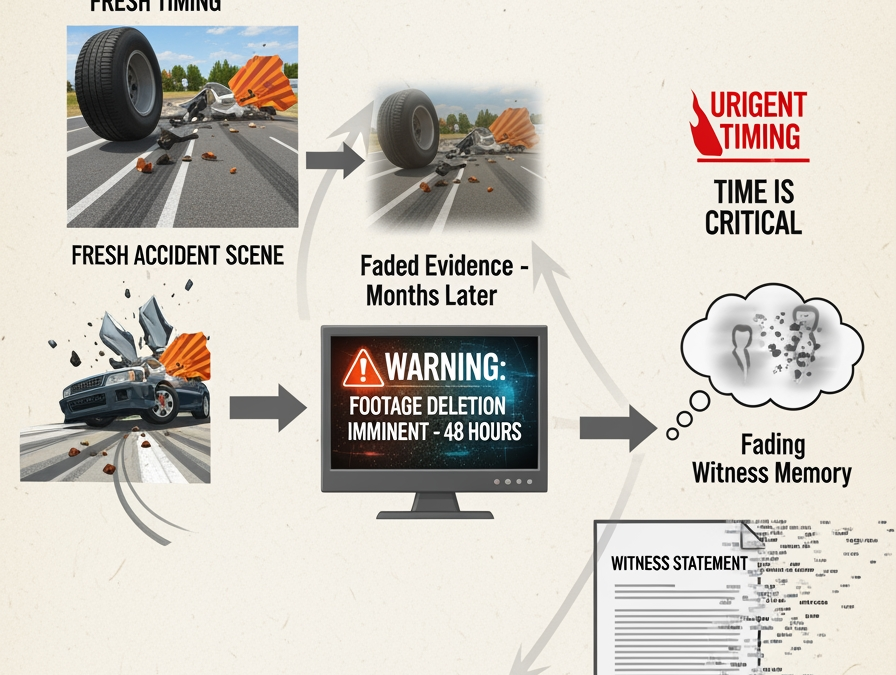
When an injury occurs – whether at work, on the road, or in a public place – the hours and days immediately following the incident are critical. The importance of early legal intervention cannot be overstated, as prompt action directly impacts the strength of a claim, the preservation of vital evidence, and ultimately, the compensation outcome. Many injured individuals underestimate how quickly crucial evidence disappears, deadlines approach, and insurance companies begin building defences against claims.
Understanding when and why to seek legal guidance immediately after an incident protects rights and maximises entitlements. This article explores the compelling reasons why early legal intervention makes the difference between a successful compensation claim and a compromised outcome, and how experienced legal representation safeguards injured persons from the moment an incident occurs.
Why Early Legal Intervention Matters
Preserving Critical Evidence
Evidence deteriorates rapidly after an incident. Witness memories fade within days, CCTV footage gets overwritten within weeks, and physical evidence at accident scenes disappears as sites are cleaned or modified. The importance of early legal intervention becomes apparent when considering that solicitors can immediately issue evidence preservation notices to relevant parties, compelling them to retain surveillance footage, incident reports, and other time-sensitive materials.
Medical documentation forms the cornerstone of personal injury claims. Seeking immediate medical attention creates contemporaneous records linking injuries directly to the incident. Delays in medical treatment create gaps that insurance companies exploit, arguing that injuries resulted from other causes or aren’t as severe as claimed. Legal practitioners guide clients to appropriate medical specialists who provide thorough assessments and detailed reports essential for substantiating claims.
Photographs of injury sites, damaged vehicles, hazardous conditions, or defective equipment must be captured immediately. Environmental factors change quickly – weather conditions shift, lighting varies, and temporary hazards get removed. Solicitors coordinate professional documentation of accident scenes, ensuring comprehensive photographic and video evidence captures all relevant details before they’re lost forever.
Avoiding Statutory Time Limits
Western Australia imposes strict time limits for commencing legal proceedings. For workers compensation claims under the Workers’ Compensation and Injury Management Act 1981, injured workers must notify their employer within a specified timeframe and lodge claims promptly to preserve entitlements. Missing these deadlines can result in claim rejection regardless of merit.
Personal injury claims involving motor vehicle accidents, public liability incidents, or other negligence matters typically face a three-year limitation period from the date of injury or date of knowledge. However, certain circumstances require much shorter notification periods. For instance, claims against government entities often involve six-month notice requirements. Early legal advice ensures all procedural deadlines are identified and met, protecting the right to pursue compensation.
The benefits of early legal advice include understanding which limitation periods apply to specific circumstances. Complex cases involving ongoing injuries, delayed symptom manifestation, or multiple responsible parties require careful analysis of when limitation periods commence. Solicitors experienced in compensation law navigate these complexities, ensuring claims are lodged within required timeframes while gathering comprehensive evidence to support maximum entitlements.
Preventing Insurance Company Tactics
Insurance companies employ experienced adjusters and lawyers whose primary objective is minimising claim payouts. They often contact injured persons immediately after incidents, requesting recorded statements before individuals understand their rights or the full extent of their injuries. These early statements, made without legal guidance, frequently contain admissions or minimisations that insurers later use to reduce or deny compensation.
Low settlement offers arrive quickly, designed to resolve claims cheaply before injured persons consult solicitors. These offers rarely reflect true entitlements, excluding future medical expenses, ongoing treatment needs, permanent impairment compensation, and lost earning capacity. Without proper case valuation, individuals accept inadequate settlements that fail to cover long-term consequences of their injuries.
Delay tactics represent another common strategy. Insurers request endless documentation, conduct multiple assessments, and prolong negotiations, hoping claimants become desperate and accept lower settlements. Legal representation counters these tactics, maintaining pressure on insurers to progress claims efficiently while protecting clients from predatory negotiation strategies.
Benefits of Early Legal Advice
Accurate Case Valuation
Understanding true compensation entitlements requires comprehensive legal knowledge and experience. Compensation claims encompass multiple elements: medical expenses (past and future), lost wages, loss of earning capacity, domestic assistance, treatment and care costs, pain and suffering, and permanent impairment. Inexperienced claimants often overlook significant entitlement categories, resulting in substantial financial losses.
Economic damages involving wage loss calculations require careful analysis of pre-injury earning capacity, career progression potential, superannuation losses, and future income reduction. For catastrophic injury compensation cases involving permanent disability, actuarial assessments project lifetime economic losses, ensuring settlements provide adequate long-term financial security.
Non-economic damages compensating for pain, suffering, loss of enjoyment of life, and permanent impairment require understanding of assessment frameworks and precedent case values. Experienced Perth lawyers accurately value these components, ensuring injured persons receive fair compensation reflecting the true impact of their injuries on quality of life and future wellbeing.
Strategic Claim Preparation
The benefits of early legal advice extend to strategic claim management from inception. Solicitors develop comprehensive evidence-gathering strategies, identifying necessary expert reports, specialist medical assessments, vocational evaluations, and economic analyses required to prove all compensation elements. This proactive approach builds strong claims that withstand insurer scrutiny and support maximum settlements.
Medical treatment planning forms a crucial aspect of claim preparation. Solicitors refer clients to appropriate specialists – orthopaedic surgeons, neurologists, psychiatrists, rehabilitation physicians – ensuring injuries receive optimal treatment while generating detailed medical reports substantiating compensation claims. Coordination between treating practitioners and medico-legal experts creates cohesive medical evidence linking injuries to incidents and documenting ongoing treatment needs.
Documentation protocols established early ensure clients maintain comprehensive records of all injury-related expenses, treatment appointments, medication costs, travel expenses, and impact on daily activities. This contemporaneous documentation proves invaluable during claim assessment, eliminating disputes about treatment necessity and ensuring reimbursement for all legitimate expenses.
Reduced Stress and Clarity
Navigating legal processes while recovering from injuries creates overwhelming stress. Understanding complex legislation, insurer requirements, medical assessment procedures, and negotiation protocols exceeds most individuals’ legal knowledge. Professional legal representation removes this burden, allowing injured persons to focus entirely on physical and psychological recovery while solicitors manage all claim aspects.
Clear communication about legal rights, available options, realistic timeframes, and expected outcomes provides certainty during uncertain times. Solicitors explain each stage of the claims process, prepare clients for assessments and negotiations, and provide regular updates on claim progression. This transparency reduces anxiety and empowers clients to make informed decisions about their cases.
Professional handling of all paperwork, correspondence, negotiations, and procedural requirements ensures nothing is overlooked. Insurers and employers cannot take advantage of unrepresented claimants when experienced solicitors advocate zealously for their clients’ rights and entitlements throughout the entire claims process.
Common Legal Matters Requiring Immediate Intervention
Workplace Injuries
Workplace injuries demand immediate legal attention due to strict notification requirements and early decision-making that impacts long-term entitlements. Under WorkCover WA, injured workers must notify employers promptly and submit claims within specific timeframes to preserve compensation rights. Early legal advice ensures compliance with all procedural requirements while protecting against unfair treatment by employers or insurers.
Return-to-work disputes frequently arise in the early stages of recovery. Employers and insurers may pressure injured workers to resume duties before medical clearance or attempt to assign unsuitable duties inconsistent with medical restrictions. Legal representation protects workers from inappropriate return-to-work pressures while ensuring modified duties accommodate injury limitations and support safe, gradual recovery.
Permanent impairment assessments timing significantly impacts compensation entitlements. Assessments conducted too early may underestimate permanent consequences, resulting in reduced compensation. Solicitors advise on optimal assessment timing, ensuring maximum medical improvement has been reached and all permanent impairments are properly documented and compensated.
Motor Vehicle Accidents
Car accident injury compensation claims involve complex insurance processes and strict reporting obligations. Western Australia’s compulsory third-party insurance scheme requires prompt notification to insurers, and delays can jeopardise claims. The importance of early legal intervention is particularly evident in motor vehicle cases, where liability disputes, multiple parties, and insurance policy complexities create significant challenges for unrepresented claimants.
Medical evidence collection windows are critical in traffic accident claims. Insurers arrange independent medical examinations shortly after incidents, and these assessments significantly influence claim outcomes. Without legal guidance, claimants may attend these examinations unprepared, resulting in reports that understate injury severity or question causation. Solicitors prepare clients thoroughly for independent assessments and arrange comprehensive medico-legal reports from treating specialists that provide balanced evidence of true injury impacts.
Third-party claim processes require detailed knowledge of insurance legislation, common law negligence principles, and assessment frameworks. Experienced solicitors navigate these processes efficiently, gathering necessary evidence, negotiating with insurers, and pursuing litigation when fair settlements cannot be achieved through negotiation.
Public Liability Incidents
Public liability claims arising from slip and fall accidents, premises hazards, defective products, or negligent service provision require immediate evidence preservation. Property owners and businesses quickly remedy dangerous conditions after incidents, destroying evidence of hazards that caused injuries. Legal practitioners immediately investigate incident sites, photograph conditions, interview witnesses, and obtain incident reports before evidence disappears.
Premises liability evidence includes maintenance records, inspection logs, previous incident reports, and documentation of hazard awareness. These materials are typically only obtainable through formal legal processes, making early solicitor involvement essential for securing comprehensive evidence supporting negligence claims.
Witness identification becomes increasingly difficult as time passes. People who observed incidents may be difficult to locate weeks or months later, and their memories of events fade significantly. Immediate witness interviews by legal representatives preserve detailed accounts of incident circumstances, supporting liability claims and refuting defence arguments that attempt to blame injured persons for their own injuries.
What Happens When Legal Help Is Delayed
Weakened Evidence
Delaying legal consultation allows critical evidence to deteriorate or disappear entirely. Witnesses become impossible to locate, their contact details lost and memories of events insufficient to provide useful testimony. CCTV footage gets overwritten on regular cycles, typically within 30 days, eliminating objective evidence of incident circumstances and potentially destroying proof of negligence.
Physical evidence at accident sites changes as businesses make repairs, property owners address hazards, or weather and traffic alter conditions. Photographs taken weeks after incidents fail to accurately represent conditions at the time injuries occurred, allowing insurers to argue that depicted hazards didn’t exist or weren’t as severe as claimed.
Incomplete medical records resulting from delayed treatment or failure to follow recommended specialist assessments create gaps that insurers exploit. Arguments that injuries weren’t serious enough to warrant immediate treatment or that delayed symptoms suggest alternative causation undermine claims and reduce compensation outcomes significantly.
Compromised Claim Value
Inadequate initial medical treatment resulting from financial concerns or misunderstanding of entitlements creates permanent documentation gaps. Conservative initial diagnoses that fail to identify serious injuries or refer to appropriate specialists result in medical records that understate injury severity and ongoing treatment needs.
Gaps in employment loss documentation occur when injured persons don’t properly record time off work, fail to obtain medical certificates for all absence periods, or don’t document reduced working hours and duties during recovery. These gaps allow insurers to dispute wage loss claims and reduce economic loss compensation.
Difficulty proving causation arises when significant time passes between incidents and legal consultation. Insurers argue that intervening events, pre-existing conditions, or subsequent injuries – rather than the original incident – caused ongoing symptoms and treatment needs. Establishing clear causation becomes increasingly complex as time passes, potentially reducing or eliminating compensation entitlements.
Increased Legal Complexity
Statute of limitations challenges create significant problems when individuals consult solicitors close to limitation periods. While claims may technically be filed within timeframes, insufficient time remains for thorough evidence gathering, expert assessment, and proper claim preparation. Rushed claims often result in weaker negotiating positions and reduced settlements.
Disputed liability issues multiply when early investigation doesn’t occur. Insurers construct defence arguments based on their own investigations, and refuting these arguments becomes difficult without contemporaneous evidence gathered immediately after incidents. Liability disputes extend claim resolution timeframes and may necessitate expensive litigation to achieve fair outcomes.
Higher legal costs and longer resolution times result from evidentiary gaps, disputed liability, and the additional work required to overcome problems created by delayed legal intervention. While these costs don’t affect clients under no win no fee arrangements, extended claim duration delays final settlement and prolongs financial and emotional stress associated with unresolved claims.
How Separovic Lawyers Provides Immediate Support
No Win No Fee Arrangements
Financial concerns should never prevent injured persons from accessing quality legal representation. Separovic Lawyers operates on a no win no fee basis for compensation claims, ensuring everyone can afford experienced legal assistance regardless of financial circumstances. This arrangement eliminates upfront costs and aligns solicitor interests with client outcomes – payment only occurs when claims succeed.
Risk-free initial consultations allow injured persons to understand their legal rights, potential entitlements, and claim prospects without any financial commitment. These consultations provide opportunity to ask questions, understand the claims process, and make informed decisions about legal representation based on complete information about case strengths and realistic expectations.
Payment structures under no win no fee arrangements are transparent and clearly explained during initial consultations. Clients understand exactly what costs apply to successful claims, with fees calculated as agreed percentages of recovered compensation. This transparency eliminates surprise costs and allows injured persons to make informed decisions about pursuing their legal rights.
Comprehensive Initial Case Assessment
Free evaluation of claim strength provides honest assessment of prospects, likely compensation ranges, and potential challenges. This evaluation considers all evidence, applicable legislation, limitation periods, liability issues, and damages elements, ensuring clients receive realistic advice about their cases from the outset.
Clear explanation of legal rights and options empowers clients to make informed decisions. Solicitors explain available claim pathways, alternative dispute resolution options, litigation prospects, and likely timeframes for each approach. This comprehensive information allows injured persons to choose strategies that align with their priorities, whether rapid settlement or maximum compensation through litigation.
Strategic roadmaps for claim progression provide clarity about next steps and expected timelines. Clients understand what evidence needs gathering, which specialists to consult, what assessments insurers will require, and how negotiations will proceed. This roadmap reduces uncertainty and ensures clients feel informed and involved throughout the entire claims process.
Immediate Action on Client’s Behalf
Evidence preservation letters issued immediately after retainer protect crucial evidence from destruction or disposal. These letters notify employers, property owners, insurers, and other relevant parties of potential claims and their legal obligation to preserve all evidence, including CCTV footage, incident reports, maintenance records, and witness statements.
Insurance company communications are handled professionally and strategically from the moment of engagement. Solicitors manage all insurer contact, preventing clients from making damaging admissions, accepting inadequate offers, or providing statements without proper preparation. This professional management ensures insurers take claims seriously and negotiations progress efficiently toward fair settlements.
Medical specialist referrals connect clients with experienced practitioners who provide optimal treatment while generating comprehensive medico-legal reports supporting compensation claims. Coordination between treating practitioners and legal representatives ensures medical evidence comprehensively documents all injuries, treatment needs, and permanent impairments, supporting maximum compensation entitlements.
Conclusion
The importance of early legal intervention extends far beyond simple legal advice – it fundamentally determines claim outcomes by preserving evidence, meeting critical deadlines, and protecting injured persons from insurance company tactics designed to minimise compensation. The benefits of early legal advice include accurate case valuation, strategic claim preparation, and professional representation that allows focus on recovery while solicitors zealously advocate for full entitlements.
Workplace injuries, motor vehicle accidents, and public liability incidents all benefit significantly from immediate legal consultation. Every day of delay allows evidence to disappear, memories to fade, and insurers to build stronger defences against claims. The most successful compensation claims consistently involve early legal intervention that protects rights from the moment incidents occur.
Experienced legal representation transforms the claims process from an overwhelming burden into a managed procedure where professional advocates handle all legal complexities while injured persons focus on physical and psychological recovery. Understanding when to seek legal help – immediately after any incident causing injury – represents the single most important decision affecting compensation outcomes.If you’ve suffered a workplace injury, been involved in a car accident, or experienced any incident causing harm, contact us immediately for a free, no-obligation consultation. Separovic Lawyers’ experienced team provides immediate support, protecting your rights and maximising your compensation entitlements from day one. Don’t let critical evidence disappear or deadlines pass – early legal intervention makes the difference between compromised outcomes and full compensation for your injuries.