
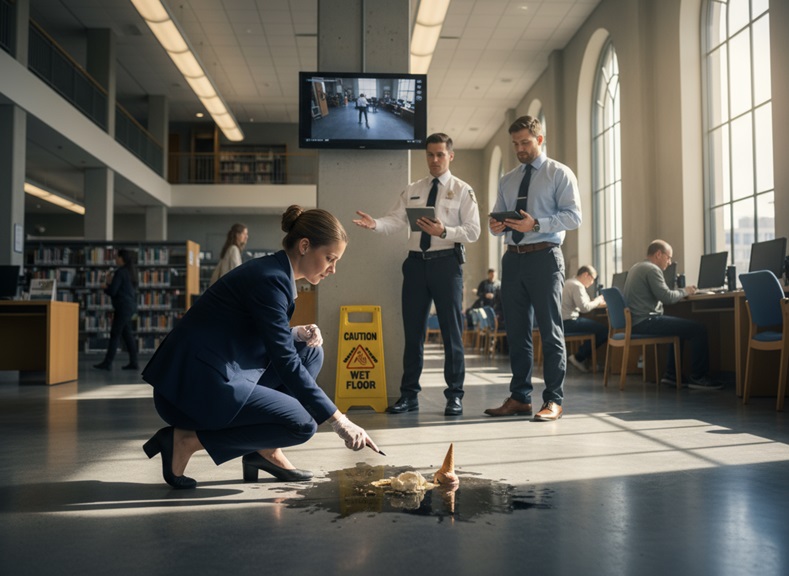
Public liability claims arise when unsafe conditions in public or private places cause injury that could have been avoided with reasonable care. Supermarkets, shopping centres, cafés, parks, leisure venues, car parks, and residential common areas all carry obligations to keep people reasonably safe. Success depends on whether you can prove negligence in public liability with clear, reliable evidence and a structured legal strategy that meets Western Australian requirements.
At Separovic Injury Lawyers, our legal team supports injured people across Western Australia by collecting persuasive evidence, applying the correct legal tests, and pursuing compensation that reflects both immediate losses and long-term needs. The sections below set out the law, practical proof steps, WA-specific time limits, compensation rules, and case examples that show how courts analyse these disputes.
What is Negligence
Negligence means a failure to take reasonable care that results in injury. In Western Australia, the Civil Liability Act 2002 (WA) sets out the modern framework for duty, breach, causation, and damage, and includes specific rules for general damages and other heads of loss. Courts assess what a reasonable person would have done in the circumstances, taking into account the probability of harm, the likely seriousness of harm, and the burden of taking precautions. The obligation is not to eliminate all risk, but to take reasonable steps to prevent foreseeable injury.
A simple illustration clarifies the idea. A shopping centre knows a roof section drips during heavy rain. Staff fail to erect warning signs or mop the entry quickly. A customer slips, fractures a wrist, and requires surgery. The risk of slipping on wet tiles is obvious and easily reduced with simple precautions, so failing to act reasonably supports a finding of negligence.
The Burden of Proof
In public liability claims, the burden of proof rests on the injured person. The standard is the balance of probabilities: the court decides whether it is more likely than not that the defendant’s negligence caused the injury and loss. This civil standard is less stringent than the criminal standard, but it still requires organised, credible evidence that addresses each legal element.
Western Australian courts apply the Civil Liability Act test for breach and causation, along with the Occupiers’ Liability Act 1985 (WA) when the injury arises from the state of premises controlled by an occupier. The occupier’s duty is to take care that is reasonable in all the circumstances so entrants will not suffer injury because of dangers due to the state of the premises or things done or omitted there. AustLII
The Four Elements You Must Establish
To prove negligence in public liability, your evidence must cover four pillars:
- Duty of care
The defendant owed a duty to take reasonable care to avoid causing foreseeable harm. Occupiers owe a statutory duty to entrants under the Occupiers’ Liability Act 1985 (WA). AustLII
- Breach of duty
The defendant failed to take reasonable care. WA’s Civil Liability Act codifies the breach analysis and factors the court considers when deciding whether the conduct fell short of the reasonable standard. WALW
- Causation
The breach caused the harm. Australian courts assess factual causation and scope of liability using Civil Liability Act principles. The High Court’s reasoning in Strong v Woolworths illustrates how courts look at systems of inspection and cleaning, timing evidence, and probabilities to decide whether the breach probably caused a fall. High Court of Australia
- Damage
Recognisable loss followed, such as injury, pain, medical costs, and lost earnings. The Civil Liability Act then controls how damages are assessed and capped in certain categories, including non-pecuniary loss. AustLII+1
Gathering Evidence
Strong evidence persuades insurers and courts. Prompt collection prevents key details from disappearing.
Essential evidence types
- Photographs and video
Capture the hazard from multiple angles before it is cleaned, removed, or repaired. Include context shots that show absence of signage, the path of travel, lighting, weather conditions, and floor materials.
- Witness statements
Record names, mobile numbers, and short descriptions from people who saw the incident or the hazardous condition shortly before the incident. Independent witnesses carry weight during proving negligence in court.
- Preservation requests
Ask the occupier to preserve CCTV and cleaning logs. Dated cleaning rosters, inspection checklists, maintenance tickets, and repair requests often decide liability.
- Medical records
Keep GP notes, emergency records, radiology, specialist reports, physiotherapy notes, and pharmacy receipts. These documents verify injury, treatment, prognosis, and restrictions.
- Financial loss records
Save payslips, tax summaries, employer confirmation of time off, job role descriptions, and invoices for care or equipment. These substantiate economic loss.
- Diary notes
Maintain a daily symptom and restriction diary. Detail sleep disruption, pain levels, tasks you cannot perform, and domestic assistance needed.
A well-documented brief aligns each piece of evidence with the four elements, reducing gaps that insurers often exploit.
The Role of Incident Reports
Businesses commonly produce incident reports after accidents. These records may list date, time, location, staff present, and a short description of events. Obtain a copy promptly. Treat the document as one piece of the puzzle rather than the whole picture. Reports sometimes understate hazards or omit admissions. Pair the report with photos, witness details, CCTV, and maintenance data to build a complete and reliable narrative.
Case Studies and Leading Decisions
Courts decide public liability disputes by applying statutory tests and drawing on earlier decisions with similar facts. The following well-known Australian authorities help explain how judges think about breach and causation.
Slip on a floor at a national retailer
Strong v Woolworths Limited [2012] HCA 5
A customer slipped on a greasy chip near a store entrance. The High Court analysed factual causation under the Civil Liability Act and accepted probabilistic reasoning based on the store’s cleaning system and the likely time the contaminant was present. Where a retailer lacks an adequate inspection system, or cannot show inspections were performed when they should have been, courts may infer that proper care would likely have removed the hazard before the fall. The decision underscores the evidentiary value of cleaning schedules, CCTV, and timing evidence. High Court of Australia
Violence on licensed premises
Adeels Palace Pty Ltd v Moubarak [2009] HCA 48
Two patrons were shot after a fight at a New Year’s Eve function. The High Court considered duty, breach, and causation in the context of crowd control and security measures. The result demonstrates that plaintiffs must prove not only inadequate precautions but also that reasonable measures would probably have prevented the harm, not merely that they could have done so. This focus on probability is central to proving negligence in court. High Court of Australia
Uneven surface at a residence
Neindorf v Junkovic [2005] HCA 75
A garage sale attendee tripped on a small height difference in a driveway. The High Court discussed the relevance of obvious risks and what is reasonable for a residential occupier to do. The analysis shows that not every hazard creates liability; the context, the magnitude of risk, and the ease of precautions matter. High Court of Australia
How these decisions help
Together, these cases highlight three themes: reasonable systems and precautions, credible timing evidence for contaminants or hazards, and proof that a practical precaution would probably have avoided the injury. Building your case around these themes aligns your evidence with the way courts reason in public liability disputes.
Contributory Negligence and Defences
Defendants often argue that the injured person contributed to the incident. WA’s Civil Liability Act sets out contributory negligence principles, presumptions about intoxication, and rules on obvious risks and no duty to warn of obvious risks. Where a risk is inherent or obvious, the standard of care may be lower, or warnings may not be required. Courts adjust damages according to the injured person’s share of responsibility, expressed as a percentage deduction. AustLII
Common defence themes
- Footwear choices unsuited to known conditions.
- Distraction by a mobile phone that prevented seeing an obvious hazard.
- Ignoring barrier lines or cordons.
- Intoxication at the time of the incident.
A careful plaintiff strategy anticipates these points with photographs of poor lighting, witness accounts about inadequate warnings, and medical evidence about functional limitations that made the hazard difficult to perceive or avoid.
Compensation in Western Australia
WA legislation controls both what can be claimed and how specific heads of damage are calculated. The Civil Liability Act restricts non-pecuniary loss and sets parameters for economic loss and care services.
Heads of damage typically available
- General damages (non-pecuniary loss) for pain, suffering, and loss of enjoyment of life, subject to thresholds and caps determined under sections 9, 10, and related provisions. Courts apply a sliding scale that denies general damages below Amount A and limits awards through Amount C, with definitions and indexation set in the Act. AustLII+1
- Past and future economic loss, including wage loss and reduced earning capacity, guided by statutory methodology and evidence such as work history, performance reviews, and expert vocational or accounting reports. WALW
- Medical, rehabilitation, and allied health expenses, including surgery, physiotherapy, psychology, pharmaceuticals, aids and equipment, and travel for treatment.
- Home care and support, where domestic assistance is needed due to injury, addressed in specific provisions regarding the assessment of gratuitous and commercial care
- Special damages and out-of-pocket expenses, such as transport, home modifications, and replacement services.
Industry summaries note that WA introduced a sliding scale for non-pecuniary loss in the early 2000s, consistent with the Civil Liability reforms, reinforcing the need to exceed thresholds and to ground claims in medical evidence.
Important note on figures
Exact dollar limits for Amount A and Amount C change over time through indexation and schedules. The safest approach is to have our team confirm the current figures at the time of assessment and negotiate with insurers on up-to-date thresholds.
Western Australia Time Limits
WA imposes strict time limits. The Limitation Act 2005 (WA) generally requires that personal injury proceedings be commenced within three years of the incident date, subject to limited extension mechanisms and special categories. Missing the limitation period can bar the claim. Multiple WA legal resources and the statute confirm the three-year general personal injury period.
Prompt advice ensures the correct defendant is identified in time, CCTV is preserved, and any pre-litigation protocols or insurer notifications are completed without delay.
Analogy: Building a case like a project plan
A public liability claim functions like a carefully sequenced project. The scope defines duty and what precautions were reasonable. The timeline reconstructs when the hazard appeared and how long it remained. The resources include documents, CCTV, witness accounts, and expert opinions. The quality control stage tests each item against the legal elements until the plan is robust enough to negotiate or present at trial. This project-style discipline is what turns raw facts into reliable proof during proving negligence in court.
Step-by-Step Timeline From Injury to Resolution
The following timeline sets realistic expectations and protects limitation rights. Actual durations vary with medical recovery, contested liability, insurer engagement, and court availability.
Stage 1: Immediate safety and early evidence (Day 0 to Day 14)
- Seek medical attention and follow clinical advice.
- Photograph the hazard, signage, lighting, spills, broken surfaces, steps, loose stock, or debris.
- Collect witness details.
- Request the incident report and ask the occupier to preserve CCTV and cleaning or inspection records.
- Keep all receipts and start a symptom and restriction diary.
Stage 2: Early legal advice and strategy (Week 1 to Week 6)
- Engage our team to identify the responsible occupier, contractor, or managing agent.
- Issue formal preservation and information requests.
- Map the likely breach scenario using statutory tests under the Civil Liability Act and Occupiers’ Liability Act
- Stabilise medical care and obtain early medical reports.
Stage 3: Investigation and liability analysis (Month 2 to Month 5)
- Review CCTV, cleaning logs, inspection rosters, maintenance tickets, and risk assessments.
- Commission expert evidence if needed, for example on slip resistance or human factors.
- Analyse breach and factual causation, applying Strong v Woolworths reasoning on inspection systems and timing.
- Consider defences based on obvious risk, warnings, or contributory negligence and prepare responses grounded in evidence.
Stage 4: Medical stabilisation and damages assessment (Month 4 to Month 10)
- Obtain treating specialist reports and, if required, independent medical assessments.
- Calculate paid and unpaid care under the Act’s provisions on home care services.
Stage 5: Pre-litigation negotiations (Month 6 to Month 12)
- Serve a detailed claim brief on the insurer, including liability analysis, medical evidence, and quantified damages.
- Engage in negotiations or a settlement conference.
- Consider structured settlement options for long-term needs where appropriate.
Stage 6: Issuing proceedings if required (Before the 3-year limit)
- File in the appropriate WA court to protect limitation rights under the Limitation Act 2005 (WA).
- Exchange pleadings, disclosure, and expert evidence.
- Attend mediation ordered by the court.
Stage 7: Trial and judgment (If settlement not achieved)
- Present evidence logically against each element.
- Prove breach by reference to reasonable precautions and systems.
- Address defences on obvious risk, warnings, and contributory negligence under the Civil Liability Act and Occupiers’ Liability Act. AustLII+1
- Seek damages calculated under WA thresholds and statutory parameters. AustLII+1
Practical Checklist
At the scene
- Photograph the hazard, signage, lighting, and surroundings.
- Collect witness names and contact details.
- Report the incident and request a copy of the report.
Within the first fortnight
- Seek medical care and follow treatment plans.
- Instruct our team to send preservation notices for CCTV and logs.
- Start a diary and keep all receipts.
During investigation
- Gather cleaning rosters, maintenance reports, and risk assessments.
- Consider expert input on slip resistance, lighting levels, or ergonomics.
- Organise employer confirmation of time off and reduced duties.
Before settlement or trial
- Ensure general damages exceed thresholds and are supported by clinical evidence.
- Particularise all economic loss with documents and, where helpful, accounting evidence.
- Prepare to answer obvious-risk and contributory-negligence arguments with photographs, measurements, and witness testimony.
Key Takeaways
- Liability turns on reasonable precautions, not perfection.
- Success requires coverage of all four elements: duty, breach, causation, damage.
- Evidence wins cases: photos, CCTV, cleaning logs, witness accounts, and medical reports.
- WA law controls compensation through thresholds and caps for non-pecuniary loss and defined methods for economic loss and care. The general limitation period for personal injury is three years from the incident date.Early legal advice streamlines proving negligence in court and maximises settlement prospects.
Contact and Support
If unsafe conditions in a public or private place caused injury, our team can help prove negligence in public liability claims with a structured evidence plan and a clear damages strategy. For tailored guidance and a free case assessment, contact us.
At Separovic Injury Lawyers, we act for injured people across Western Australia and pursue outcomes that fund treatment, protect income, and support long-term recovery.